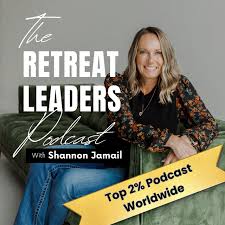
EP 284 Energy Before Strategy: Why Your Retreat Business Can't Outperform You with Michelle Villalobos
Why is congruency more important than appearing perfect when holding retreat space?
Retreat leaders often believe they must appear to have everything figured out to earn trust, but participants actually respond to congruency, not perfection . When you pretend to be fine while struggling internally, that disharmony creates disconnect—and people sense it instantly. Showing up authentically, even when you're not okay, builds far deeper trust.
The misconception runs deep: many retreat facilitators assume that vulnerability signals weakness or incompetence. In reality, the opposite is true. As discussed in this episode of The Retreat Leaders Podcast , when there is a gap between your inner state and your outer presentation, that mismatch creates a subtle but unmistakable tension that undermines everything you teach.
What horses teach us about presence and congruency
Perhaps the most striking evidence of this principle comes from equine-assisted experiences. Horses respond exclusively to congruency —they have no capacity for social politeness or the performance dynamics humans use daily. If you show a horse you are struggling, it reads that as truth and responds to it. If you claim to be calm while internally anxious, the animal detects the dissonance and reacts accordingly.
This is precisely why retreat participants—many of whom arrive seeking transformation and healing—are so attuned to authenticity. They unconsciously mirror your congruency or lack thereof. Michelle Villalobos explains in the full episode that when you allow people to see your genuine state—including moments when you're not okay—they trust you more deeply because they recognize you as real, not as a performer on a stage.
"When you are doing work that aligns with who you really are, it naturally elevates your emotional state and energy."
Michelle Villalobos — Business Strategist, Retreat Leader, and Creator of the Business Breakthrough Program. Over nearly two decades, Michelle has helped coaches, consultants, speakers, and thought leaders build scalable businesses through transformational experiences. She has led more than 150 retreats globally and taught thousands how to create meaningful impact and recurring revenue. She is also an author of But I Want to Fly, an adventure book for dreamers illustrated by artist Kiki Kulahari.
The deeper insight here is that congruency itself becomes an energy . When you stop the exhausting performance of perfection and instead show up as you actually are in that moment—grounded, honest, maybe imperfect—your retreat participants feel that shift. They relax. They trust. They become more open to the transformation you are facilitating. The paradox is that appearing perfect actually distances people, while being congruent brings them closer.
For retreat leaders building long-term impact, congruency is not optional—it is the foundation. Every interaction, every teaching moment, every silence in the room reflects either alignment or pretense. Participants know the difference. And as Michelle Villalobos explores further in the full conversation , your business cannot outperform your own energy and congruency—which makes this not just an interpersonal principle, but a business imperative.
Participants trust congruency over perfection, because disharmony between inner state and outer presentation creates palpable disconnect.
Horses demonstrate this principle directly—they respond to your actual state, not your performance, which is why equine-assisted work reveals truth instantly.
Showing authentic struggle builds deeper trust than pretending to have everything figured out.
Your retreat business cannot outperform your own energy and alignment—congruency is both a leadership principle and a business ceiling.
Can a successful retreat business be built without doing inner healing work first?
You cannot lead from an open wound if that wound is directly tied to what you are teaching. When your personal healing in an area is incomplete, participants will sense the incongruency energetically—no matter how polished your messaging is. You can lead a retreat on topics outside your trauma, but teaching healing in the exact area where you remain unhealed creates a credibility gap that energy alone cannot hide.
The core issue is embodiment versus instruction . Teaching a retreat is not simply delivering content or techniques; it is inviting participants into your energetic field and your lived example. If you are standing in front of people showing them how to close a wound while that same wound remains open within you, they will feel the mismatch.
This does not mean you must be perfectly healed before starting a retreat business. It means integrity requires alignment between your message and your state . If you are building a retreat business around emotional healing, conflict resolution, or spiritual transformation in an area where you are actively struggling, that incongruency becomes the hidden curriculum participants absorb—more powerfully than any words you speak.
As Michelle Villalobos explains in the episode , you must be the embodiment of the thing you are leading. This distinction—between leading something and living it—is what separates a transactional workshop from a transformational retreat.
"When you are doing work that aligns with who you really are, it naturally elevates your emotional state and energy."
Michelle Villalobos — Business Strategist, Retreat Leader, and Creator of the Business Breakthrough Program. For nearly two decades, Villalobos has helped coaches, consultants, speakers, and thought leaders build scalable businesses through transformational experiences. She has led more than 150 retreats and taught thousands how to create meaningful impact and recurring revenue. She is also an author whose work, But I Want to Fly—illustrated by artist Kiki Kulahari—brings her philosophy into book form for dreamers of all ages.
The real question is not whether you can build a retreat business without inner healing—you can, technically, if your topic is far removed from your wounds. But if you want to build a profitable, impactful retreat business rooted in authenticity, the work begins inward. Your energy and alignment will outpace any marketing strategy. As discussed at length in this podcast episode , participants do not just book retreats for the agenda—they book for the energetic transmission and the embodied wisdom of the leader.
If you are considering launching a retreat around healing, transformation, or personal growth, Michelle's full conversation with Shannon Jamail covers how to assess your own readiness and where to invest your inner work first for maximum impact and integrity.
Embodiment precedes teaching—participants will sense incongruency between your message and your lived state, especially in areas tied to your unhealed wounds.
You can lead a retreat on topics outside your trauma, but teaching healing in an area where you remain unhealed creates a credibility gap no marketing can close.
Energy and alignment are your most powerful business assets—they transmit more powerfully than any agenda or technique you deliver.
Building an authentic, impactful retreat business requires inner alignment; your business cannot outperform your personal energy state.
How can retreat leaders cultivate emotional resilience while staying authentic in their leadership?
Emotional resilience comes from feeling your emotions fully while simultaneously cultivating the feelings you want —what Michelle Villalobos calls the paradox of alchemy. Rather than repressing difficult emotions, you acknowledge them completely, then consciously elevate your emotional state, allowing you to transform your energy in real time.
The Paradox of Alchemy: Two Actions at Once
The core insight here is that resilience isn't about suppressing negative feelings or forcing positivity. Instead, it's about holding both emotional truths at the same time —letting yourself feel grief, frustration, or doubt without judgment, while also actively cultivating joy, confidence, or calm.
This approach prevents the burnout that many retreat leaders experience when they feel pressure to always be "on" or present a perfect front. When you allow yourself to feel what's actually happening in your body and mind, you release the energy drain that comes from internal conflict. At the same time, by consciously choosing which feelings to nurture, you regain agency over your emotional state rather than being controlled by circumstance.
This practice directly impacts your capacity to lead. As Michelle explains in the episode , when you align this internal work with who you really are, you naturally elevate your energy and become a more authentic, grounded leader for your retreat participants.
Why Authenticity Is Non-Negotiable for Retreat Leaders
Retreat participants sense when a leader is not fully present or is performing a version of themselves. Emotional authenticity builds trust faster than any marketing message . When you've done the internal work to feel your emotions and cultivate resilience, you show up as the real version of yourself—not a sanitized, perfect version.
This authenticity is especially crucial in retreat spaces, where people are often vulnerable and seeking genuine transformation. Leaders who use the paradox of alchemy method create safer containers because they demonstrate that feeling emotions is normal and manageable—they model healthy emotional processing in real time.
The methodology also prevents the energy leakage that happens when leaders suppress their true feelings. Michelle discusses further in the podcast how this alignment between internal state and external presence directly influences retreat outcomes and business growth.
"When you are doing work that aligns with who you really are, it naturally elevates your emotional state and energy."
Michelle Villalobos — Business Strategist, Retreat Leader, and Creator of the Business Breakthrough Program. Over nearly two decades, Villalobos has guided coaches, consultants, speakers, and thought leaders in building scalable businesses through transformational experiences. She has designed and led more than 150 retreats and mentored thousands in creating meaningful impact alongside sustainable revenue streams. She is also the author of But I Want to Fly, an adventure book for dreamers of all ages.
The practice of feeling your emotions fully while cultivating intentional feelings opens a unique possibility: the episode explores how this paradox applies to specific challenges retreat leaders face —from managing grief or disappointment to maintaining enthusiasm during difficult business seasons.
Resilience is not about repressing emotions; it's about feeling them fully while consciously cultivating the emotional state you want.
This dual practice prevents energy drain caused by internal conflict between what you feel and what you project.
Authentic emotional presence builds trust with retreat participants faster than any marketing or perfected persona.
Alignment between your internal emotional work and external leadership directly elevates both your energy and your retreat business outcomes.
What is the definition of being energy rich according to retreat business experts?
Energy rich is a state of complete alignment across five core dimensions of your life : alignment with your life force energy, physical self-care, personal values, a healthy relationship with your past, and an inspiring vision for the future. It's not a state you buy or achieve—it naturally emerges when these elements work in harmony.
This definition reframes what retreat leaders and coaches often overlook. Many focus on external strategies, marketing tactics, and business mechanics without realizing that their own energy state is the foundational layer on which all else rests. You cannot outperform your own level of alignment.
The first dimension—alignment with your life force energy—means tuning into the natural vitality that flows through you when you're engaged in work that resonates deeply. As Michelle Villalobos explains in the episode , when you align your work with who you truly are, your emotional state and natural energy elevate automatically.
Physical self-care—the second pillar—isn't about perfection. It's about respecting your body enough to fuel it well, move it intentionally, and rest it adequately. Your body is the vessel through which your energy flows , and neglecting it weakens your entire presence.
The third element, alignment with your values, means your daily actions and business decisions reflect what genuinely matters to you, not what you think should matter. When there's a gap between your values and your actions, it drains energy constantly—often without you realizing it.
Your relationship with your past—the fourth dimension—deserves particular attention. Many retreat leaders and coaches carry unresolved wounds, regrets, or old narratives that unconsciously limit their capacity to inspire others. Healing or integrating your past unlocks tremendous energy for your present work. This is explored in greater depth in this podcast episode , which traces how transformative breakthroughs can reshape your entire business trajectory.
Finally, an inspiring vision for the future—the fifth pillar—provides direction and magnetism. Without it, even aligned people can feel stuck or purposeless. Your vision doesn't need to be grandiose; it must simply light you up.
"When you are doing work that aligns with who you really are, it naturally elevates your emotional state and energy."
Michelle Villalobos — Business Strategist, Retreat Leader, and Creator of the Business Breakthrough Program. Over nearly two decades, she has guided coaches, consultants, speakers, and thought leaders in building scalable businesses rooted in transformational experiences. She has led more than 150 retreats, taught thousands how to create lasting impact and recurring revenue, and authored an adventure book for dreamers titled But I Want to Fly, illustrated by artist Kiki Kulahari.
If you're curious about how Michelle's own awakening—triggered by a personal crisis in 2014—led her to pioneer this whole-being approach to retreat business (a shift that happened around 2018), the full conversation covers that transformation in detail .
Energy rich requires alignment across five dimensions: life force, body, values, past, and future vision.
Your personal energy state is the foundation—your business cannot perform above your own level of alignment.
Physical self-care, healing your past, and living your values are not optional extras; they directly fuel your capacity to lead and inspire others.
An inspiring vision for the future provides the magnetic pull that keeps energy alive and purposeful.
What does the principle Energy Precedes Outcomes mean for retreat leaders and coaches?
Energy Precedes Outcomes is fundamentally about aligning what you do with who you really are . When your work matches your authentic self—your values, gifts, and purpose—it naturally elevates your emotional state and energy, creating the conditions for genuine impact and sustainable success.
For retreat leaders and coaches, this principle operates at every level. It's not simply about doing the right activities or executing the perfect strategy. Instead, it's about bringing your entire life into alignment with what you are called to experience, give, share, lead, and express through your work.
When you operate from this place of alignment, something shifts. Your retreats aren't just well-organized events with excellent yoga classes and organic meals—though those matter. Your energy becomes the transmission. As Michelle Villalobos discusses in the episode , participants feel that resonance. They sense whether you're truly living your purpose or simply going through motions.
"When you are doing work that aligns with who you really are, it naturally elevates your emotional state and energy."
Michelle Villalobos — Business Strategist, Retreat Leader, and Creator of the Business Breakthrough Program. For nearly two decades, she has helped coaches, consultants, speakers, and thought leaders build scalable businesses through transformational experiences. She has led more than 150 retreats and taught thousands how to create meaningful impact and recurring revenue. She is also an author of the adventure book for dreamers, But I Want to Fly.
Why alignment precedes strategy every time
Many retreat leaders approach their business backwards. They chase the strategy, the marketing formula, the perfect funnel—and wonder why they still feel exhausted or unfulfilled. The Energy Precedes Outcomes principle flips this.
When you're misaligned—when your work doesn't genuinely reflect who you are or what you believe in— no strategy can compensate . Your energy flags. Your messaging sounds inauthentic. Participants sense the disconnect. Conversely, when you're aligned, your energy carries the work. Your authenticity becomes your marketing. Your presence becomes the container.
This alignment work isn't spiritual bypassing—it's practical business wisdom. The conversation with Michelle Villalobos unpacks how this principle shaped her own journey from breakdown to building a thriving retreat business that has impacted thousands. The energy work came first; the results followed.
What alignment looks like in practice
Alignment means asking yourself hard questions. Are you leading retreats because they genuinely excite you, or because they seem profitable? Are you attracting the right participants, or just bodies to fill seats? Are you honoring your own boundaries and capacity, or overextending to chase revenue?
When you're aligned, your calendar reflects your values . Your retreat design reflects your actual gifts. Your messaging reflects your true transformation, not a borrowed framework. Your energy naturally elevates because you're not living a contradiction.
This doesn't mean your business won't face challenges. It means you'll face them with integrity intact and energy replenished—not depleted. The full episode explores practical ways to audit your alignment and redesign your retreat business to reflect your authentic purpose, including how Michelle's own transformation journey taught her this lesson at scale.
EP 283 Retreat Audit: Why Your Retreat Isn't Filling (A Real-Life Case Study)
Should retreat leaders focus marketing messaging on features like yoga classes and meals or on transformation benefits?
No one is buying the yoga classes or the organic meals— they are buying peace, confidence, connection, healing, belonging, growth, and learning. Features are secondary noise. Make transformation and emotional outcomes the core of your messaging, not the logistics.
The distinction matters because potential retreat guests don't scroll landing pages to learn about class schedules or meal ingredients. They scroll to feel something—to imagine themselves transformed. When you lead with features, you're listing amenities; when you lead with benefits, you're selling the person they'll become.
According to the retreat audit discussed on this episode , this shift from feature-heavy to benefit-focused marketing is one of the most common blind spots retreat leaders face when their registrations stall. The yoga and meals are the vehicle—not the destination.
Why features fade in the noise
Most retreat websites look identical to one another. Everyone offers yoga. Everyone serves organic meals. Wellness centers across the world promise the same surface-level amenities. You cannot compete on features alone because features are commoditized —your competitor down the road offers the same thing.
But transformation cannot be copied. The specific healing, confidence, or sense of belonging a guest experiences through your unique approach, your energy, your community, and your expertise—that is singular. That is what fills a retreat. As Shannon Jamail explains in the case study , the moment you stop listing what you offer and start articulating what guests will feel and become, your messaging finds its audience.
The psychology is straightforward: potential guests are already skeptical of claims . They have heard "organic meals" a thousand times. But when you speak directly to their desire for peace or their hunger for real connection, you speak to the actual reason they clicked on your page.
From amenity checklist to emotional promise
A feature-driven landing page reads like a product spec sheet: "Includes daily yoga, organic meals, private rooms, WiFi, airport transfers, certificates." A benefit-driven landing page reads like an invitation to a new life: "Leave behind the noise. Reconnect with yourself. Return home clear, confident, and part of a community that gets you."
The second one sells out. The first one sits half-empty and puzzles the retreat leader about why. The yoga and meals sit passively in a secondary section—context, not content. Your primary real estate talks about the transformation, the feeling, the outcome, the person the guest will be when they leave.
This requires you to get clear on your own retreat's true value proposition. What shift do guests actually experience? What are they running toward, not just away from? Once you answer that—honestly—every word of your marketing becomes a reflection of that transformation rather than a list of amenities.
Shannon Jamail — Founder and host of The Retreat Leaders Podcast, retreat strategist, and owner of a 46-acre retreat center who has hosted over 100 retreats globally. Jamail has built her expertise through hands-on experience and now mentors retreat leaders on the mindset, marketing, and mechanics of filling and scaling profitable retreats.
For a deeper walk through a real retreat's marketing audit and the specific obstacles that arise—including how social media reach compounds over time and why consistent daily effort matters— listen to the full episode .
What role should FAQ sections play on retreat landing pages?
FAQ sections are a massive driver for both AI and search visibility on your retreat landing page. You should populate them with the exact questions your potential guests would type into ChatGPT, Google, or other AI tools—making your page far more discoverable and understandable to algorithmic systems.
When designing your FAQ, think like your audience. What questions would someone interested in your retreat actually search for? As Shannon Jamail explains in the retreat audit episode , the questions you include should mirror the language and concerns of real guests—not generic corporate speak.
FAQ sections serve a dual purpose: they answer human visitors directly, reducing friction in the booking journey, and they signal to search engines and AI systems what your retreat is actually about. This matters because less than 1% of your audience sees your content on social media anyway —you need every landing page element working harder to attract and convert qualified leads.
The practice has become standard across blogs and websites precisely because it compounds visibility over time. The audit discussed in this episode shows real retreat leaders applying this tactic as part of their landing page strategy—it's not optional anymore.
Make your FAQ match how people actually search
The key insight is alignment. Your FAQ questions should match the exact language potential guests use when they ask questions to AI or search engines. If someone types "Can I bring my partner to a yoga retreat?" or "What's included in the price?"—those are the questions your FAQ must answer clearly and directly.
Real language from real guests beats polished marketing copy here. People searching for retreats are curious, sometimes skeptical, often practical. They want to know logistics: dates, cost, what's included, cancellation policies, physical demands, dietary accommodations. An FAQ that addresses these concrete concerns builds trust faster than testimonials alone.
This approach also helps AI tools understand your retreat better. When ChatGPT or Grok is asked about retreats in your niche, a well-structured FAQ gives these systems the context they need to recommend you. It's becoming a critical component of modern retreat marketing alongside email, social, and paid ads.
FAQ (Frequently Asked Questions): A structured section on your landing page that lists questions your potential guests commonly ask, paired with clear, concise answers. In the context of retreat marketing, FAQs serve both user experience (reducing booking friction) and search/AI optimization (improving discoverability and algorithmic understanding of your offering).
How should retreat leaders use email marketing to support their retreat business?
Email is the owned channel you control entirely — it's far more powerful than social media where less than 1% of your audience sees your content. Build trust by sending at least one email every other week, even if you only have 10 people on your list.
Your list is your most defensible asset
Unlike social media algorithms that constantly shift, your email list belongs entirely to you. As discussed in the episode , social platforms like Instagram and Facebook reach a tiny fraction of your followers organically. Email, by contrast, lands directly in your subscribers' inboxes with no middleman.
The trust-building power of email comes from consistent, direct communication . When people opt into your list, they've given you permission to speak to them regularly. This permission-based relationship is far more valuable than any vanity follower count on social media.
The minimum cadence that actually works
The guidance is clear: send at least one email every other week at minimum. Some retreat leaders send daily emails, which works for them, but it's not a requirement for everyone. The key is consistency over intensity.
Even with a list of just 10 people, you should be using email. This isn't about scale — it's about building the habit and the relationship. As Shannon Jamail points out in this podcast , people need to see something 17 to 20 times before it hits their brain as relevant to them. Bi-weekly emails help you reach that frequency threshold without overwhelming your subscribers.
Email within a realistic time commitment
Running a retreat business demands at least 30 minutes every working day dedicated to retreat marketing and operations. Email isn't separate from that — it's one of the core channels where you invest that time. If you cannot commit at least 30 minutes daily to your retreat business, including email marketing, the timing may not be right to host a retreat.
The reason this matters is that visibility requires 6 to 12 months of lead time to compound. Your email list becomes more valuable the longer you nurture it. Small, consistent actions over time outperform sporadic effort.
Email is the only marketing channel you fully own and control — social media algorithms filter out 99% of your reach.
Send at least one email every other week, regardless of list size, to build trust and stay visible.
Start with your smallest list if you must — the habit and relationship matter more than the numbers.
Budget 30 minutes daily minimum for your entire retreat marketing effort, of which email is a core piece.
What credibility elements should retreat leaders include to build trust with potential guests?
Potential guests decide whether to book based on real testimonials, authentic videos, a transparent bio, and visible media credibility . If you're new to hosting retreats, gather testimonials from past work; avoid AI-generated content entirely because audiences detect and reject it immediately.
Building credibility as a retreat leader isn't about polishing—it's about authenticity. The most effective trust signals are the ones that feel unscripted and genuinely human. Video testimonials from real clients carry far more weight than written reviews alone, because potential guests see faces and hear real voices confirming your value.
Your about page deserves serious attention. Make your background crystal clear and abundant —explain your experience, your methodology, and why you're qualified to lead retreats. A vague or thin bio signals amateurism, even if you're deeply experienced.
As Shannon Jamail explains in the episode on retreat audits , the everyday, unglamorous content actually converts better than polished productions. Real photos, candid videos, and unfiltered moments demonstrate legitimacy—they're what performs well on social media right now.
If you have media appearances, podcast interviews, or press mentions, display them prominently. These third-party validations signal that others in your industry recognize your expertise, not just your paying customers.
The AI trap: why authenticity matters more than perfection
Retreat prospects can instantly tell when content is AI-generated, and inauthentic visuals actively damage trust . An imperfect, real video of you talking about your retreat philosophy will convert more bookings than a perfect, AI-polished marketing video.
This shift reflects a broader collapse of algorithmic tolerance for artificial content. People gravitate toward retreat leaders who show their actual selves—messy hair, natural lighting, genuine emotion. That vulnerability builds connection far faster than any slick production ever could.
Testimonials as your frontline credibility asset
If you're just starting out, testimonials from anyone you've worked with —previous clients, coaching students, workshop attendees, or professional collaborators—become your proof of work. Diversify the formats: text reviews, video snippets, photos of past events, and recorded audio quotes all reinforce the same message: people trust you enough to recommend you.
The more specific these testimonials, the better. Generic praise ("Great retreat!") doesn't convert. Targeted testimonials that mention concrete results—transformation experienced, relationships deepened, clarity gained—speak directly to what your next cohort will get.
A point detailed in this retreat-focused episode is that even small improvements in credibility signaling compound over time. Once you've gathered testimonials and real video, keep refreshing your about page, your landing page, and your social profiles so prospects consistently encounter these trust markers.
What lead time should retreat leaders allow between booking announcement and event date?
Six to twelve months is the preferred lead time for announcing a retreat before the event date. This window allows marketing visibility to compound over time and gives potential attendees the space they need to plan payments, coordinate schedules, manage work and family commitments, and make thoughtful purchasing decisions.
The lead time question isn't one-size-fits-all—it depends on your audience, the type of retreat you're hosting, and how your market typically buys. However, the six to twelve month window has emerged as the sweet spot for most retreat leaders because it balances two critical factors: enough time for your message to reach people repeatedly and enough time for attendees to mentally and financially prepare.
Visibility isn't a one-time event. As Shannon Jamail explains in The Retreat Leaders Podcast , people need to see something seventeen to twenty times before it registers in their brain as relevant. With that frequency requirement and the reality that less than 1% of your audience sees your organic social media content anyway, a six-month minimum gives you enough runway to reach frequency and break through the noise.
The twelve-month upper bound reflects how modern buyers actually shop for experiences. Attendees increasingly book retreats further in advance specifically to spread out payments over time, request time off work well in advance, arrange childcare, or align the retreat with their annual budget cycle. Giving them that runway signals respect for their planning needs and removes a psychological barrier to booking.
Shorter timelines—three, four, or even five months—are possible but require a different marketing approach: a larger existing audience, higher conversion rates, and often paid advertising to generate urgency. For most retreat leaders building organic reach, the six to twelve month window is discussed as the realistic timeline in this episode that balances effort with results.
What "visibility compounds" means
Visibility compounding refers to the cumulative effect of repeated exposure over time. Each mention, email, social post, or advertisement adds to the total number of times your audience encounters your retreat message. The more times they see it, the more familiar they become with it, until eventually the retreat moves from "I've heard of this" to "I'm seriously considering booking."
One detail worth hearing directly from the source: the specific challenges Shannon Jamail uncovered in the real retreat audit that prompted this conversation. The full episode walks through a live case study where a retreat leader was struggling with fill-rate, and the timeline decisions were just one piece of the larger picture—worth hearing in context.
Why should retreat leaders prioritize keyword strategy over hashtags for content optimization?
Hashtags are dead—algorithms scan content and ignore or even penalize them. What algorithms actually want is content optimized with real keywords already built in . Your keyword strategy matters everywhere: blogs, social posts, landing pages, emails, and beyond.
How algorithms really work with your content
Modern search and social algorithms don't care about hashtags the way retreat leaders often assume they do. In fact, hashtags can work against you. When you rely on them instead of weaving actual keywords throughout your content, the algorithm has nothing semantic to grip. It's looking for the real words—the terms your retreat audience is searching for or thinking about when they consider booking.
This shift matters because as Shannon Jamail explains in this podcast episode on retreat audits , the foundation of filling your retreat starts with how search engines and social platforms *read* your content. If your keywords aren't embedded in the actual text, you're invisible to the system that's supposed to surface your retreat to potential guests.
Keywords belong everywhere in your marketing stack
The strategy isn't just for blog posts or SEO. Every piece of content you produce needs keyword optimization —your landing page copy, your email subject lines and body text, your social captions, your video descriptions. Each touchpoint is an opportunity to signal relevance to algorithms.
For retreat leaders, this is especially critical because your marketing window is often narrow. With 6 to 12 months of lead time preferred for retreat visibility to compound, and needing to spend at minimum 30 minutes every working day on marketing, every word counts. You can't afford to waste space on hashtags when you could be using it for keywords that actually move the needle. This principle is central to the retreat audit framework discussed in the episode.
Think of your email marketing, too. One email per week to every other week is the minimum recommended cadence—and each subject line and body copy should include the keywords that matter to your retreat positioning. The same applies whether you're using Google Ads, Meta Ads, or any paid channel.
The real reason hashtags fail
Hashtags feel like a quick way to reach people, but they're treated as metadata, not content . Algorithms prioritize the semantic meaning of your actual words. A retreat leader using "#yoga #wellness #retreat #travel" is essentially hoping the hashtag itself will do the work. Meanwhile, a retreat leader who writes, "This 5-day yoga and wellness retreat in Napa combines restorative practice with vineyard relaxation," is giving the algorithm exactly what it needs to match their content to someone searching for that experience.
The frustration many retreat leaders face—that less than 1% of their audience even sees their organic social content—isn't just about algorithm suppression. It's partly about weak keyword integration. If your content doesn't clearly signal what it's about through actual language, the algorithm has no reason to amplify it. You're competing against millions of posts, and only keywords help the algorithm understand your retreat's unique value.
Keyword optimization: The practice of intentionally incorporating search and language terms relevant to your audience throughout your marketing content—headlines, body text, metadata, subject lines, image alt text—so that search engines and social algorithms understand the meaning and relevance of your message. If you want deeper insight into how one real retreat leader approached their filling challenges, the full episode includes a live retreat audit case study that walks through landing page mistakes and broader marketing misalignment—many of which trace back to weak keyword strategy.
Hashtags are penalized or ignored by modern algorithms; keywords embedded in actual content are what matters.
Keyword strategy applies across all channels: blogs, emails, landing pages, social posts, video descriptions, and ads.
With 30 minutes minimum daily marketing required, every word should work—swap hashtags for real keywords.
Algorithms prioritize semantic meaning of text, not metadata tags; clarity in language = better visibility.
What is the impact of organic social media reach and audience visibility for retreat marketing?
Less than 1% of your audience sees your organic social content , no matter how many followers you have. Before a retreat message even registers in someone's mind, they need to encounter it 17 to 20 times . Most retreat leaders stop promoting long before they scratch the surface of actual visibility.
The math is brutal. On platforms like Instagram, Facebook, and LinkedIn, organic reach has collapsed. Even if you have tens of thousands of followers, the algorithm shows your posts to a tiny fraction of them without paid amplification. This isn't a failure of your content—it's how social media platforms function.
Add to this the neurological reality of attention: human brains require repeated exposure before new information feels relevant . A single post, no matter how compelling, won't trigger the decision-making circuits needed to book a retreat. People are drowning in information. Your retreat message has to surface repeatedly and consistently before someone thinks, "Wait, this might actually be for me."
The repetition threshold is higher than most retreat leaders expect
This is where many retreat leaders underestimate the work. The moment you feel sick of talking about your own retreat is precisely when you're barely beginning. As covered in this episode of The Retreat Leaders Podcast , retreat leaders frequently pull back their marketing efforts because they feel repetitive or pushy—exactly when the message should be accelerating.
The visibility problem compounds when you consider frequency. Consistent, daily presence beats sporadic viral moments . A retreat leader posting once a week on Instagram will reach far fewer people than one posting daily, even accounting for algorithm fatigue. The compound effect of multiple exposures—across email, social platforms, and content channels—is what eventually moves prospects from awareness to action.
This is why Shannon Jamail recommends spending at least 30 minutes every working day on retreat marketing . Without that baseline investment, your message never accumulates enough weight to break through the noise.
Organic social reach is limited to less than 1% of your total followers on major platforms.
People need between 17 and 20 exposures to a message before they consciously register it as relevant.
The moment you feel repetitive is when your marketing is just beginning to work—not when it should stop.
Consistent daily presence across channels compounds visibility more effectively than sporadic high-effort posts.
How frequently should retreat leaders engage in marketing and content creation to fill their retreats?
If you cannot dedicate at least 30 minutes every working day to retreat marketing and content creation, you probably should not host a retreat. During those daily 30 minutes, focus on one social post, one story, email outreach, networking in relevant groups, or creating partnerships with others—all accelerated with AI tools today.
This is not a suggestion to occasionally post or market when you feel inspired. It is a non-negotiable commitment tied directly to whether your retreat fills or sits empty. As Shannon Jamail explains in the episode , the retreat business is ultimately *your* responsibility, not your marketing consultant's or your retreat venue's.
The math is simple: less than 1% of your audience actually sees your social media content at any given time. Your audience needs to encounter your retreat message 17 to 20 times before it registers as relevant to them. One post a month or sporadic email blasts will never reach that frequency. Consistency, driven by a daily commitment of effort, is the only way to compound visibility over time.
Why 30 minutes is the floor, not the ceiling
A half-hour daily investment seems modest on paper, but it forces you to stay visible across multiple channels. In those 30 minutes, you can publish to social platforms, send a message to your email list, engage in community discussions, or reach out to potential partners directly. Modern AI tools now allow an incredible amount of work to be completed in this timeframe —what once required hours can happen in minutes with the right prompts and templates.
The real risk is underestimating how long consistent visibility takes to build. Most retreat leaders expect results in weeks; the reality is 6 to 12 months of steady content and outreach before visibility compounds into bookings . Skip your daily 30 minutes, and you reset the clock. Miss a week, and you've lost momentum that took months to build.
If you are tempted to outsource all marketing without being deeply involved yourself, understand that this podcast covers the hard truth that nobody can fill your retreat for you —your voice, your connection, and your leadership are irreplaceable in the sales conversation.
The channels and cadence that work
Your 30-minute daily window should rotate across email, social media, and direct outreach. Email, in particular, is non-negotiable: send to your list at least every other week, and ideally once per week . Email reaches people who have already shown interest in you; it is not subject to social media algorithm changes and reaches far more consistently than any post.
For social media, accept that your reach is limited. Instead of chasing viral moments, focus on the retreat marketing strategies detailed in this episode , which emphasize consistent, authentic posts over quantity-chasing campaigns. One genuine post per day, distributed across your strongest platforms (typically Instagram and LinkedIn for retreat leaders), builds far more authority than five scattered posts with no strategy.
Do not rely on paid ads alone. While platforms like Meta Ads and Google Ads have their place, organic reach combined with direct outreach—joining Meetup groups, engaging in LinkedIn discussions, or connecting with past clients—creates the relationship foundation that actually converts browsers into retreat participants.
Commit a minimum of 30 minutes every working day to retreat marketing; without it, your retreat will not fill.
Your audience needs to see your retreat message 17 to 20 times before it registers; sporadic marketing will never reach this frequency.
Expect 6 to 12 months of consistent visibility-building before bookings compound; consistency is far more important than tactics.
Prioritize email outreach (every other week minimum) and direct community engagement over chasing social media algorithms alone.
Use AI tools to maximize output in your daily 30-minute window, but stay personally involved—no one can sell your retreat as effectively as you can.
What are the most common landing page mistakes that prevent retreat registrations from converting?
Your landing page must clearly communicate within three to four seconds who the retreat is for, what problem it solves, and what transformation visitors will experience—or conversions will fail. Flowery emotional language alone is not enough; your page must answer specific structural questions that AI systems and human visitors both need answered immediately.
When Shannon Jamail audits retreat landing pages, the number one mistake she finds is vague messaging that sounds beautiful but fails to clarify the core offer. Retreat leaders often use language that appeals emotionally but doesn't explain concretely what happens during the retreat or who benefits most.
The Five Questions Your Landing Page Must Answer Immediately
Your landing page must address these five critical points in clear, direct language: Who exactly is this retreat for? Be specific about your ideal participant, not just "anyone interested in wellness." Second, what specific problem does this retreat solve for them? Third, what is the transformation or promise—what will they feel, know, or have after attending?
Fourth, why are you the right person or organization to lead this retreat? What credentials, experience, or unique perspective do you bring? Fifth, why this particular retreat, and why now? As detailed in the podcast episode , these five elements must be visible immediately, not buried below multiple paragraphs of background story.
The mistake many retreat leaders make is leading with emotional language or imagery instead of clarity. While emotion matters, visitors need to recognize themselves in your offer within seconds, or they will leave and never return. This is especially true for AI systems crawling your page for relevance—they need clear, direct language to understand what your retreat offers.
Why Clarity Matters More Than Flowery Copy
Retreat leaders often confuse emotional appeal with clarity. A beautifully written landing page about "transformative journeys" and "sacred spaces" sounds good, but it doesn't tell a visitor whether the retreat is for anxiety relief, spiritual awakening, business strategy, or fitness. The landing page must function as a filter , not a mysterious invitation.
When prospective participants land on your page, they are asking themselves one question: "Is this for me?" If your page doesn't answer that question in the first few seconds, they will assume it isn't and move on. As discussed in this strategy audit , clarity is the first step to conversion, not an afterthought.
Many retreat leaders also underestimate the role of consistency. Your landing page messaging must align with how you speak about the retreat on social media, in your email list, and in conversation. If your Facebook post describes one benefit but your landing page emphasizes another, visitors become confused about what they are actually signing up for.
The Time Constraint Reality
You have approximately three to four seconds to capture attention and communicate value. In that window, a visitor must understand if the retreat solves their problem . After that, they scroll or close the browser. This is not negotiable—it is how human attention works online. No amount of beautiful design will override unclear messaging.
One detail often overlooked in retreat marketing is the role of social proof and specificity in landing pages— discussed in depth in the full episode —which can dramatically improve conversion rates when applied correctly alongside clear messaging.
Your landing page has three to four seconds to communicate who the retreat is for, what problem it solves, and what transformation visitors will experience.
Answer five structural questions clearly: Who is this for? What problem does it solve? What is the transformation? Why you? Why this retreat, why now?
Flowery emotional language alone fails both human visitors and AI systems looking for clarity and specificity.
Your landing page must function as a filter that helps visitors immediately recognize whether the retreat is right for them.
Landing page messaging must remain consistent across all channels—social media, email, and in-person conversation—or visitors become confused about what they are signing up for.
EP 282 Why Live Music and Art Make Retreats More Powerful with Christine Baird
Why is the comment section and exposure to unfiltered public thoughts a neurologically unnatural stressor for content creators?
Comment sections function as a stream of unfiltered public consciousness that humans are not neurologically equipped to process or manage all at once. We were never designed to hear everyone's random, unfiltered thoughts simultaneously—especially the negative ones people would never say face-to-face—creating a psychological stress fundamentally different from in-person interaction.
The core issue isn't criticism itself. People have always faced feedback, rejection, and disagreement. What's neurologically novel is the simultaneous, anonymous exposure to mass opinion at scale. In traditional human environments, an individual might receive feedback from a handful of people they know or respect. Online comment sections collapse this into an unstructured avalanche.
This matters especially for content creators and performers who share their work publicly. As Christine Baird discusses in this episode of The Retreat Leaders Podcast , the constant stream of unfiltered reactions creates a unique form of stress. Our brains evolved in small, face-to-face communities where social feedback was limited, predictable, and often came from people we had ongoing relationships with.
When someone encounters a negative comment face-to-face, there's an immediate human context: tone of voice, body language, the relationship history with that person, and the ability to respond or disengage naturally. Anonymous digital criticism removes all these social anchors , making it psychologically rawer and harder for the nervous system to process as "normal" social feedback.
The anonymity also removes social reciprocity. In-person criticism carries social cost for the critic; they must own their words. Online, there is no such consequence, which means comments often reflect impulses people would suppress in direct conversation. This creates an asymmetrical emotional load on the creator, who must absorb opinions expressed with a disinhibition they would never encounter offline.
Christine Baird — Solo Singer-Songwriter who spent 11 years in New York doing musical theater, cruise ship contracts, and wedding singing before discovering her authentic voice through solo acoustic gigs in Utah. She relocated to Austin approximately one and a half years ago and has built her career around creating live experiences that transform audiences through music and presence.
The stress compounds because creators cannot leave the comment section unread . Unlike in-person encounters, where a creator can walk away or change the subject, digital comments remain visible, persistent, and algorithmically highlighted—especially negative ones. This transforms passive feedback into an active, ongoing threat that invades the creator's attention and rest.
Understanding this neurological mismatch is crucial for anyone building an online presence or managing a retreat business with digital touchpoints. The solution isn't to ignore feedback entirely, but to recognize that comment section exposure requires intentional boundaries and nervous system management. Creators benefit from curating what they read, limiting frequency, and building community norms that foster psychological safety—much like how Christine structures her live retreats and performances to invite participants to engage at their own comfort level.
Learn more about how Christine approaches building safe, transformative experiences and the broader conversation around nervous system health for content creators and retreat leaders.
How does a long career journey and accumulated life experience provide resilience against criticism and external pressure to compromise authenticity?
A long career journey builds deep self-knowledge and inner strength that makes you resistant to outside criticism and pressure to compromise. By living through challenges, facing difficult seasons, and working through limiting beliefs, you develop authentic embodiment of yourself—a foundation that younger people who achieve fast success often lack, leaving them vulnerable to swaying from their true path.
Time as a Teacher: Why the Winding Path Matters
Christine Baird didn't build her artistic voice overnight. After growing up in Seattle and the American West, she spent 11 years in New York City navigating musical theater, cruise ship contracts, and wedding singing—years that kept her in a constrained box, performing roles written for others rather than discovering her own voice. It was only after relocating to Utah for what she calls "a nervous system reset" that she found her authentic artistic expression through solo acoustic performances.
This lived experience matters profoundly. Christine explains that those longer, sometimes painful chapters—what she calls "dark nights of the soul"—are not obstacles to authenticity. They are the very ingredients that build it. When you work through limiting beliefs and face real struggle, you develop the substance and empowerment needed to stand behind your work without flinching when others challenge it.
The Vulnerability of Early Success Without Grounding
Christine draws a sharp contrast with people who achieve significant success young. Without the accumulated wisdom and tested identity that comes from a longer journey, early success can feel fragile. Younger artists lack the lived experience to anchor themselves when external pressure mounts or critics emerge. They haven't yet faced and overcome the internal obstacles that teach you who you truly are beneath the need for approval.
This resilience isn't arrogance or stubbornness—it's grounded self-knowledge. A point explored in depth in this episode of The Retreat Leaders Podcast , where Baird discusses how her journey, including even her near-miss audition for The Voice in Los Angeles when the teams filled up on the final day, ultimately led her to Austin and a clearer sense of artistic purpose than a traditional competition might have provided.
Christine Baird — Solo Singer-Songwriter. After 11 years in New York performing in musical theater and wedding singing, Baird relocated to Utah to rediscover her authentic voice through solo acoustic work. She has since moved to Austin and continues performing music that reflects her genuine artistic vision rather than external expectations or commercial formulas.
The deeper insight here is that resilience against compromise is built, not inherited. It comes from time spent understanding yourself, from setbacks that teach you what matters, and from enough life lived to know the difference between temporary external noise and your true north. This accumulated wisdom is the armor that protects authenticity.
What long-term vision drives a musician's career beyond fame or commercial success?
The driving vision is to rise on stage and create a transformative experience where audiences sing back, leaving them feeling happy, elevated, and inspired to become better versions of themselves . This isn't about fame for its own sake—it's about using influence to give others the same uplifting experience that inspired artists have given you. The impact remains equally powerful whether you're performing to one grateful listener or selling out Madison Square Garden.
The vision born from childhood
Christine Baird has held this vision since childhood: to connect with an audience that sings back to her . It's a specific, visceral image—not a generic dream of stardom, but a precise moment of mutual exchange. This clarity of purpose has anchored her decisions throughout her career, from her early years in Seattle to her 11 years in New York doing musical theater and cruise ship contracts.
The authenticity of this vision became clearer when Baird relocated to Utah for what she describes as a nervous system reset. There, through solo acoustic gigs, she discovered her true artistic voice—stripped of the commercial and role-based constraints that had defined her New York years. She notes that this shift toward authenticity is explored in depth in the episode , revealing how self-knowledge shapes long-term career direction.
Baird emphasizes a critical distinction: influence, not audience size, defines meaningful impact . Whether she's performing at Signore winery in Fredericksburg or imagining a larger stage, the goal remains unchanged—to leave people feeling transformed and inspired. This mindset removes the pressure of constant growth and reframes success around emotional resonance.
This perspective allowed her to move to Austin approximately one and a half years ago without needing external validation. Even when she was recruited to compete on The Voice in Los Angeles, the experience taught her that career validation comes from internal alignment, not from industry gatekeeping. The episode delves into how this mindset shift shapes artist resilience and long-term fulfillment .
"Music and singing is so powerful because it is a frequency that can literally change your biology and it can change the energy of a room and of a space."
Christine Baird — Solo Singer-Songwriter who spent 11 years in New York doing musical theater, cruise ship contracts, and wedding singing before relocating to Utah to rediscover her authentic voice through solo acoustic performances. She has since moved to Austin and continues to build her career on the foundation of genuine human connection and transformative musical experience.
For Baird, the long-term vision is ultimately not about chasing opportunities—it's about creating the conditions for the specific experience she envisioned as a child , one audience member at a time. The real power lies in recognizing that influence and impact are choices, not accidents of fame.
A musician's core vision often centers on emotional exchange and audience transformation rather than commercial metrics or industry status.
Authenticity and self-discovery (such as Baird's transition from constrained professional roles to solo acoustic work) sharpen career direction and resilience.
Impact is measured by influence on individual listeners, not by venue size or scale; one grateful person can represent the same success as an arena.
This vision-driven approach removes the anxiety of constant growth and replaces it with clarity about what truly matters in artistic work.
How does giving retreat participants permission to engage in different ways—listening, dancing, singing along, or observing quietly—enhance the overall group experience?
Explicitly inviting retreat participants to engage however feels authentic to them—whether dancing, singing, requesting songs, or quietly witnessing—creates psychological safety that allows everyone to experience the music on their own terms . This freedom honors each person's unique nervous system and transforms the group experience from a mandated performance into a collective moment where different forms of participation coexist without judgment.
When facilitators remove the unspoken pressure to engage in a single, "correct" way, participants relax into their authentic response. Some are moved to tears, others dance and twirl with abandon, and still others prefer to sit quietly and absorb the energy. This diversity of engagement actually strengthens the group's collective field , as each person's genuine presence—however expressed—adds their real energy rather than a forced performance.
The permission you give shapes what participants feel able to do. As Christine Baird explains in this episode , the invitation itself signals that the retreat is a safe container for authentic expression, not a place where conformity is required. When someone hears "you can dance, sing, request a song, or simply listen—whatever feels right for you," the nervous system settles. The participant no longer monitors themselves for correctness; they simply exist as they are.
This approach also deepens trust in the retreat leader. Participants recognize that the facilitator genuinely cares about their comfort and individual experience, not just orchestrating a uniform group moment. That trust radiates outward, creating a container where vulnerability, joy, and authentic connection can emerge naturally—not because they were scripted, but because people felt safe enough to show up as themselves.
"Music and singing is so powerful because it is a frequency that can literally change your biology and it can change the energy of a room and of a space."
Christine Baird — Solo Singer-Songwriter. After 11 years performing musical theater, cruise ship contracts, and wedding gigs in New York, Baird relocated to Utah for a nervous system reset where she discovered her authentic voice through solo acoustic performances. Recruited to compete on The Voice in Los Angeles, she later moved to Austin to pursue her solo career and now brings her understanding of frequency and authentic expression to retreat leaders and group facilitators.
For retreat leaders seeking to deepen impact, the full conversation between Shannon Jamail and Christine Baird explores how live music's transformative power depends not just on the quality of the performance, but on the psychological conditions you create around it. Christine shares concrete language for inviting different forms of participation and how that shifts the entire group dynamic.
Explicitly invite multiple forms of engagement (dancing, singing, listening, observing) rather than assuming one form of participation is correct.
Psychological safety emerges when participants know they won't be judged for how they respond, allowing them to relax into genuine rather than performed authenticity.
Diverse engagement patterns strengthen the collective field by allowing each person's real presence to contribute, rather than flattening everyone into uniform behavior.
Permission-based facilitation builds trust in the retreat leader and signals that the space prioritizes individual nervous system comfort over orchestrated uniformity.
What is the difference between singing in a constrained professional environment versus discovering your authentic voice?
Survival mode in a constrained professional environment forces you to conform to external expectations , leaving your authentic voice trapped beneath layers of client demands and commercial necessity. When Christine Baird left New York after 11 years of musical theater and wedding gigs—where she had to sing Whitney Houston songs in prescribed ways to please audiences and stay employed—she returned to Utah and experienced a nervous system reset that finally allowed her to express herself genuinely, without the pressure of hustling just to survive.
From Conformity to Freedom: The Cost of Professional Survival
During her 11 years in New York, Christine Baird was living the dream many musicians pursue—steady work, stage time, professional contracts. Yet this professional security came at the cost of her own artistic identity . She was locked into roles, expected sounds, and client-driven setlists. Every performance was a transaction: sing what the audience expects, deliver what the venue requires, stay profitable.
The specificity of this constraint matters. She wasn't singing poorly or without skill; she was singing perfectly—just not authentically. Her voice was technically accomplished but emotionally filtered through what would sell, what would book the next wedding, what would keep her afloat in one of the world's most expensive cities. This is the paradox of professional performance: mastery of technique and commercial viability can actually distance you from genuine expression .
What Changed When the Pressure Lifted
Returning to Utah triggered what Christine describes as a nervous system reset. As explored in this episode of The Retreat Leaders Podcast , this wasn't simply a change of scenery—it was a fundamental shift in the conditions of survival. Without the immediate pressure to book the next gig or pay New York rent, her body and mind could finally relax. From that stillness, her authentic voice emerged.
In Utah, Christine began performing solo acoustic sets, no longer bound by client expectations or commercial formulas. This freedom allowed her to align her voice with her true artistic instinct , to choose songs and styles that genuinely reflected who she was rather than who the market wanted her to be. The nervous system reset didn't make her a better singer—it gave her permission to be herself as one.
"Music and singing is so powerful because it is a frequency that can literally change your biology and it can change the energy of a room and of a space."
Christine Baird — Solo Singer-Songwriter. Born in Seattle and raised across the American West before studying musical theater in New York City, Baird spent over a decade performing professionally in high-pressure commercial environments—cruise ship contracts, Broadway-adjacent theater, and wedding circuits—before relocating to Utah. After discovering her authentic artistic voice through solo acoustic performances, she relocated to Austin to pursue her genuine creative vision, having been recruited for The Voice and performing at venues like Signore winery in Fredericksburg.
The deeper insight here: as discussed in the full episode , your authentic voice isn't hidden because you lack talent—it's hidden because survival demands conformity. The moment external survival pressure decreases, authenticity naturally resurfaces. This pattern applies far beyond music; anyone who has shifted from a high-pressure corporate role to independent work, or from a constraining environment to one with real freedom, recognizes this phenomenon immediately.
Christine's journey also reveals a timing insight worth noting: the episode touches on her audition for The Voice in Los Angeles , a moment where she was still caught between authentic self-expression and mainstream commercial validation—yet by that point, her nervous system had already begun its reset, making her ready for that opportunity in ways her New York years would never have allowed.
Professional constraints, even when technically successful, can suppress your authentic voice by forcing conformity to client expectations and market demands.
A nervous system reset—reduced survival pressure, changed environment, new conditions—is often necessary for authentic expression to emerge naturally.
Authentic voice is not a skill gap; it surfaces when external pressure to conform decreases, allowing your true artistic instinct to lead.
Solo performance without commercial mandates creates the freedom for genuine self-expression that high-pressure professional environments cannot provide.
Why is live music more effective than AI-generated or playlist music at creating emotional transformation in group experiences?
Live music creates emotional connection and biological frequency shifts that AI cannot replicate because it carries the lived experience, layers, and authentic emotion of the human performer . Singing originates from within your body and is shaped by stress, emotional triggers, and personal history—all of which convey genuine feeling to listeners. This human resonance literally changes the biology and energy of a space in ways generated content cannot achieve.
The difference lies in authenticity. When you hear live music, you're not just hearing notes and melody—you're receiving the accumulated weight of a performer's experience. As Christine Baird explains in the episode , singing is fundamentally different from other instruments because it originates from within your own body. Your voice carries your nervous system, your stress levels, your emotional history. No algorithm can replicate that transmission.
This distinction matters deeply for retreat leaders and group facilitators. A performer's authentic emotion literally shapes the frequency of the room —it changes the collective nervous system of everyone present. When you gather people in shared space and introduce live music performed by someone channeling real experience, you create a resonance that playlist music or AI simply cannot match. The performer becomes a tuning fork for the group's transformation.
"Music and singing is so powerful because it is a frequency that can literally change your biology and it can change the energy of a room and of a space."
Christine Baird — Solo Singer-Songwriter. After spending 11 years performing in New York—musical theater, cruise ships, and weddings—Baird relocated to Utah seeking a nervous system reset, where she discovered her authentic voice through intimate acoustic performances. She was recruited to audition for The Voice in Los Angeles before eventually moving to Austin, where she continues to bring this lived, embodied approach to her singing practice.
For retreat attendees, this matters because retreats are designed for transformation. Transformation requires resonance—a felt sense of connection to something real and alive . Live music provides that. It signals to participants' nervous systems that they are in the presence of authentic human expression, which creates safety and openness. AI-generated playlists, by contrast, carry no performer, no stakes, no vulnerability. They are content, not presence.
The specificity of what happens in live performance also cannot be predicted or replicated. Each night is different. The performer responds to the room's energy, adjusts their delivery, brings their full self to that particular moment. This unpredictability—this aliveness—is precisely what creates lasting memory and emotional shift. Baird explores this further in the full conversation , discussing how retreat leaders can leverage live performance as a core element of their offering rather than a nice-to-have addition.
Live singing originates from within the performer's body and carries their stress, emotions, and personal history—creating authenticity AI cannot simulate.
Music functions as a frequency that directly alters the biology and collective nervous system energy of a space.
Transformation in group settings requires felt resonance with authentic human presence, which live performance provides and playlists do not.
Live music's unpredictability and real-time responsiveness to the room are features, not bugs—they create the conditions for lasting emotional shift.
EP 280 The Fastest Way to Build a Profitable Retreat Business with Shari Leid
What role does messaging play in filling a retreat, according to the conversation between Shari Leid and Shannon Jamal?
Nail-tight messaging — clearly identifying who your retreat is for and what problem it solves — is the single most important element before worrying about platforms or tactics. Without this clarity, no marketing tool will move the needle. As evidence, Shari Leid shared that a woman in her early 70s booked her retreat without ever speaking to Shari first, trusting entirely on the resonance of her messaging and brand.
Most retreat leaders spend their time obsessing over which social media platforms to use, how to run ads, or what email sequences to deploy. Shannon Jamail and Shari Leid agree that this is backwards. Messaging comes first—everything else follows. If your ideal retreat participant doesn't instantly recognize themselves in your words, no amount of tactical effort will fill your retreat.
The proof is personal. One of Shari Leid's retreat participants was a woman in her early 70s who made the decision to book without any direct conversation or sales call. Her trust was built entirely through the clarity and authenticity of Shari's messaging and the way it spoke to her sense of belonging and connection. She saw herself in the retreat's purpose and committed.
This principle applies regardless of your experience level or business stage. As Shannon Jamail explains in the episode , even seasoned entrepreneurs and coaches often skip this foundational work, jumping straight to tactics because it feels more concrete and urgent. But retreats don't fill because of tactics. They fill because the right people recognize that your retreat was designed for them.
Shari Leid — Attorney, Author, Speaker, and Retreat Leader. An attorney by training who stayed home to raise her children and later pivoted to writing, speaking, and retreat leadership, Shari built her work around the FLIP framework (Flip the Box) — born from a 2023 cross-country journey where she shared a meal with a female stranger in every U.S. state. Her personal story of being orphaned and found in a cardboard box with no identifying information directly shaped her mission around human connection and belonging.
One detail worth exploring further: Shari also shared the specific framework she uses to diagnose connection and belonging in conversations , which ties directly into how her retreat messaging resonates with participants.
Messaging clarity—who your retreat is for and what problem it solves—must come before any marketing platform or tactic.
When messaging is strong, retreat participants will book without requiring a personal sales call or direct contact.
Most retreat leaders waste energy on tactics while skipping the foundational work of identifying and speaking directly to their ideal participant.
Real retreat participants recognize themselves in authentic, clear messaging and commit based on that resonance alone.
What key insight did Shari Leid take away from attending the Retreat Leaders Forum in Denver?
There is no single cookie-cutter approach to running a successful retreat business— leaders at all levels do things very differently . The key insight from the Denver Retreat Leaders Forum is that you must selectively adopt strategies that align with your own personality and model, rather than copying someone else's exact system.
When Shari Leid attended the Retreat Leaders Forum in Denver, she experienced something that shifted her thinking about business models and best practices. Instead of finding a universal formula that all retreat leaders follow, she discovered something far more liberating: there is profound diversity in how successful retreat businesses operate . Some leaders run large-scale retreats, others run intimate groups. Some emphasize adventure, others focus on healing or professional development. Yet all of them are profitable and impactful.
This realization matters because it removes the pressure to replicate someone else's playbook exactly. As detailed in this episode , the most important move is to understand what strategies work for others, then evaluate which ones genuinely fit your own strengths, values, and personality. What works at scale for one leader may not work for someone running a smaller, more intimate retreat operation—and that's not a failure, it's adaptation.
"A lot of us have a good life, but if we don't feel connected, we're letting that good life stop us from a great life."
Shari Leid — Attorney, Author, Speaker, and Retreat Leader. Leid is an attorney by training who later stayed home to raise her kids and began writing, publishing her first book; her fifth book is due in February. She built a portfolio career spanning writing, media contributions, speaking, and most recently retreats, centered on a framework called FLIP (Flip the Box). Born from a 2023 cross-country journey where she shared a meal with a female stranger in every U.S. state, this framework directly reflects her personal backstory—being orphaned and found in a cardboard box with no known birth date—which inspired her work on human connection and belonging.
One practical takeaway from this mindset is that Shari's approach demonstrates the power of learning from mentors while staying true to your own vision. She didn't try to become a clone of another retreat leader; instead, she studied how others structure their businesses, understand their audiences, and deliver value—then built her own system. Her retreats are capped at a maximum of 10 women per retreat, running 2 retreats per year, a format that reflects her philosophy of deep connection over mass scaling.
This is especially important for coaches, speakers, and wellness professionals who are tempted to follow a single guru's retreat model without question. The Denver forum reinforced that personalization is not a compromise—it's the source of authentic authority . When your retreat model aligns with who you actually are, your messaging becomes clearer, your ideal clients find you more easily, and your operations run more smoothly because you're not fighting against your own nature.
Successful retreat leaders operate very differently from each other—there is no universal template.
The most effective strategy is to study what works for others, then selectively adopt methods that match your personality and business model.
Personalization creates authenticity and authority; trying to replicate someone else's exact system often leads to burnout and inauthenticity.
Seeking mentorship and learning from experienced retreat leaders is crucial, but the goal is integration, not imitation.
What is Shari Leid's free FLIP app and what does it do?
Shari Leid's free FLIP app guides you through four steps that diagnose exactly where your connection breaks down after a conversation. It identifies whether you've lost focus, failed to listen, slipped into control mode, or played small—pinpointing the specific barrier so you can build authentic connection.
A diagnostic tool built on real human connection work
The app is a practical companion to Shari Leid's FLIP framework, which promises to establish genuine connection with anyone in under 60 seconds . Rather than offering generic advice, the tool walks you through a reflection process designed to reveal your own patterns in real time—right after you've had a meaningful conversation.
Each of the four diagnostic steps addresses a different reason why connection falters. Whether you realize you weren't truly present, didn't listen deeply enough, defaulted to controlling the interaction, or diminished your own voice, the app helps you name what happened so you can adjust your approach the next time.
As Shari Leid explains in the episode , the framework came from her 2023 cross-country journey, where she shared a meal with a female stranger in all 50 U.S. states , directly experiencing the power of intentional presence and vulnerable listening.
Why the app exists: making connection accessible
The FLIP app removes friction from the learning process. Instead of reading a book or waiting for a coaching session, you can access the diagnostic immediately when you need it most—right after a conversation where something felt off. That timing matters: your memory is fresh, and the motivation to understand what went wrong is highest .
The fact that it's free makes the framework accessible to anyone—coaches, retreat leaders, employees, parents—who wants to understand their blind spots around connection. A deeper dive into Shari Leid's full methodology and how she teaches the FLIP framework in her retreats can be found in this podcast episode , which covers both the mindset and the mechanics behind her work.
"A lot of us have a good life, but if we don't feel connected, we're letting that good life stop us from a great life."
Shari Leid — Attorney, Author, Speaker, and Retreat Leader. Shari is an attorney by training who transitioned to writing, media contributions, and speaking before launching her retreat business. Her work centers on the FLIP (Flip the Box) framework, born from personal experience and a 2023 cross-country journey connecting with women across all 50 states. Her fifth book is due in February. Shari's retreats are women-only, three-day experiences capped at 10 participants, held twice yearly, and grounded in her philosophy that genuine connection is the foundation of a meaningful life.
To get the full story of how Shari built her retreat business from scratch and what she learned by seeking expert guidance before her first event, listen to the complete episode where she shares both her framework and her business journey.
The FLIP app diagnoses connection breakdowns across four dimensions: focus, listening, control, and playing small.
It's a free, immediately accessible tool designed to work right after conversations when reflection is most valuable.
The framework emerged from Shari Leid's real-world experience sharing meals with women across all 50 states and her personal journey around belonging and vulnerability.
Using the app is a concrete first step toward building the authentic human connection that Shari argues is essential to living a great life, not just a good one.
What two business model additions does Shannon Jamal recommend as the most powerful revenue legs for coaches and speakers?
A membership program generating recurring revenue and in-person retreat experiences are the two most powerful business legs a coach, speaker, or online expert can add right now. As the world becomes increasingly digital and AI-driven, people across every industry are actively seeking real, face-to-face connection — making retreats a uniquely valuable offering in a saturated digital marketplace.
The shift toward these two models reflects a fundamental market truth that Shannon Jamal explores in depth in this episode : while digital content and online courses have democratized access to expertise, they've also created fatigue and commoditization. Both membership and retreat models solve different problems simultaneously.
Why membership programs create the foundation
A membership program delivers predictable monthly or annual revenue that stabilizes your business and allows you to invest in bigger projects. Unlike one-time course sales or speaking fees, members commit to ongoing access, creating a community and recurring touchpoint that deepens client relationships and increases lifetime value.
This recurring base is particularly valuable for coaches and speakers because it shifts your revenue from event-dependent to relationship-dependent. Members stay engaged year-round, refer others, and become natural candidates for your premium offerings — including retreats.
In-person retreats as the premium profit engine
Retreat experiences command premium pricing and deliver outsized profit margins precisely because they offer something no digital product can: full immersion, accountability, and genuine human connection in a contained environment. A three-day retreat for 10 participants can generate more profit than a year of course sales.
The retreat model also creates a natural funnel: your membership builds trust and filters participants, reducing your acquisition cost and increasing the likelihood of retreat attendees who are genuinely committed. As detailed in the full conversation on The Retreat Leaders Podcast , this combination — stable recurring membership revenue plus high-ticket retreat experiences — creates a resilient, scalable business structure that weatheres market changes and AI disruption.
"A lot of us have a good life, but if we don't feel connected, we're letting that good life stop us from a great life."
Shari Leid — Attorney, Author, Speaker, and Retreat Leader. Shari built a portfolio career spanning writing, media contributions, speaking, and retreats after leaving her legal practice to raise her children. Her work is anchored in the FLIP framework, developed during a 2023 cross-country journey where she shared a meal with a female stranger in every U.S. state. Her personal story — being orphaned and discovered in a cardboard box with no known birth date — directly shaped her mission to help others build deeper human connection and belonging.
One telling detail emerges in Shari Leid's approach: before launching her first retreat, she didn't rely on ego or past success — she sought expert mentorship from Shannon Jamal. This vulnerability reveals why this episode is essential listening for anyone considering retreat launches . The willingness to learn from those who've already walked the path accelerates both strategic clarity and execution quality.
Membership programs provide stable, predictable recurring revenue that funds growth and deepens client relationships over time.
In-person retreats capitalize on the global appetite for authentic human connection and command premium pricing with high profit margins.
Together, these two models create a resilient business structure that combines steady income with high-ticket revenue and natural client funneling.
The increasing digitization of the world makes physical, immersive experiences — not cheaper digital products — the true competitive advantage for coaches and speakers.
What approach did Shari Leid take before launching her first retreat to avoid costly mistakes?
Shari Leid proactively sought expert guidance from a retreat strategist before launching her first retreat, prioritizing learning from experienced practitioners over figuring everything out alone. Her philosophy is simple: start ugly and make it pretty as you go along —a mindset that values mentorship and real-world feedback over reinventing the wheel.
Rather than relying on ego or self-taught improvisation, Leid reached out to Shannon Jamail, a retreat strategist with over 100 retreats hosted , for one-on-one coaching. This deliberate choice to ask "who can I learn from?" before launching set her apart from many entrepreneurs who assume they can navigate unfamiliar territory alone.
The power of this approach lies in its humility. Seeking expert guidance early meant Leid could avoid the trial-and-error trap that costs money, time, and credibility. By working with someone who had already made mistakes so she wouldn't have to, she positioned herself to launch with greater confidence and fewer preventable missteps.
This mindset—combining competence in one domain (law, writing, speaking) with openness to learning in a new one (retreat business)—is what allows high-achievers to scale successfully across different ventures. As Shannon Jamail notes in the episode , this kind of vulnerability and willingness to learn from others is rarer than it should be, especially among driven entrepreneurs.
"That is how I found you—by asking who I can learn from, because there are other people who have done this."
Shari Leid — Attorney, Author, Speaker, and Retreat Leader. Leid is an accomplished multi-domain entrepreneur who has published four books with a fifth due in February. Her career spans writing, media contributions, speaking engagements, and now retreat leadership. In 2023, she traveled across all 50 U.S. states, sharing a meal with a female stranger in every state—an experience that inspired her FLIP framework and her mission to deepen human connection and belonging.
If you want to understand how Leid applies this coaching to the specific structure of her women-only retreats—from pricing to participant selection to the unique connection methods she employs— the full episode offers deeper tactical insights on building a retreat business from the ground up.
What is the format and target audience of Shari Leid's retreats?
Shari Leid runs women-only, three-day retreats capped at a maximum of 10 women, held twice per year. The retreats are designed for women ready to build a deeper connection to themselves, their careers, and their community — in that specific order — using her FLIP framework.
Intimate scale, intentional design
The cap of 10 participants is deliberate. Shari Leid has chosen to keep her retreats small to ensure every woman receives meaningful attention and can experience genuine connection within the group. This intimate format allows for the depth of work that her FLIP framework requires — moving beyond surface-level networking to real, lasting bonds.
As explained in the episode , the retreat structure spans three full days, giving participants time to move through the framework and practice the skills with fellow attendees. The twice-yearly schedule also reflects a sustainable business model that balances impact with consistency.
Who these retreats are for
Shari Leid's retreats are explicitly designed for women at a specific stage of readiness. They're not for everyone — they're for women who are genuinely committed to deepening three areas of their lives simultaneously: first, their connection to themselves; second, to their career trajectory; and third, to their broader community.
This intentional targeting means the women who attend arrive with a growth mindset. They're not looking for a spa weekend; they're looking for transformation. The FLIP framework, which Shari discusses in detail on the podcast , provides the structured methodology to achieve that transformation during those three days.
"A lot of us have a good life, but if we don't feel connected, we're letting that good life stop us from a great life."
Shari Leid — Attorney, author, speaker, and retreat leader. Shari built a portfolio career spanning writing, media contributions, and speaking before adding retreats. Her work is rooted in a personal journey of connection and belonging, inspired by her own story of being orphaned and found in a cardboard box with no identifying information. In 2023, she traveled across the United States sharing meals with a female stranger in every state, an experience that directly shaped the FLIP framework now central to her retreat offerings.
Shari Leid's retreats are women-only, three-day experiences held twice per year with a maximum capacity of 10 participants.
The target audience is women ready to deepen their connection to themselves, their careers, and their community simultaneously.
The small group size and structured three-day format allow for meaningful transformation work using the FLIP framework.
Retreats attract participants with a clear growth mindset, not casual seekers of relaxation, but serious practitioners of human connection.
What is Shari Leid's FLIP framework and how did it originate?
FLIP is a four-step formula designed to help you connect with anyone in under 60 seconds. Shari Leid created it in 2023 during a transformative journey across the United States, where she shared a meal with a female stranger in every state — an experience that led her to metaphorically "flip" the cardboard box she was found in as an orphan into a table of connection and belonging.
The framework emerged from Shari Leid's deeply personal story. As she explains in The Retreat Leaders Podcast , she was orphaned as an infant and placed in a cardboard box with no known birth date or identifying information. This profound beginning shaped her lifelong commitment to human connection and the search for belonging.
In 2023, Shari Leid embarked on an ambitious cross-country project that would crystallize this mission. She traveled to all 50 states and shared a meaningful meal with a female stranger in each one. Through these intimate conversations with women she had never met, she discovered patterns of isolation and disconnection that ran deep, even among people living outwardly good lives.
From isolation to action—the symbolic "flip"
This journey became the genesis of FLIP. The framework's name itself carries profound symbolism: Shari Leid took the cardboard box that had defined her earliest days—a symbol of loss, displacement, and absence—and metaphorically transformed it into a table where real connection could happen. As she experienced across 50 states, that table was essential to combating a widespread epidemic of loneliness.
FLIP is now at the heart of Shari Leid's retreat business, which she discussed in detail on the podcast . The framework helps her create intentional spaces where women gather for three-day retreats capped at just ten participants, ensuring deep, authentic connection rather than surface-level networking.
"A lot of us have a good life, but if we don't feel connected, we're letting that good life stop us from a great life."
Shari Leid — Attorney, Author, Speaker, and Retreat Leader. Shari trained as an attorney before stepping away to raise her children and pursue writing, publishing her first book and with her fifth book due in February. Her diverse career spans media contributions, speaking engagements, and retreat leadership, all unified by her mission to foster authentic human connection and belonging through the FLIP framework.
The FLIP framework's power lies in its simplicity and speed. Designed to establish a foundation of genuine connection in under 60 seconds, it addresses a real gap in how people interact—especially in contexts like retreats, where the quality of human connection directly determines the transformative impact of the experience. This is explored further in this episode of The Retreat Leaders Podcast , where Shari Leid unpacks how the framework has become central to her retreat business model.
Why did Shari Leid decide to add retreats to her speaking business?
Shari Leid added retreats to her speaking business because the speaking income alone was too unpredictable — lean months followed flush ones, with no reliable floor. As a solo entrepreneur, she wanted more steadiness, and identified retreats alongside a membership program as the two levers most likely to generate recurring, dependable revenue while deepening her connection with her audience.
The unpredictability of speaking — and the case for a steadier model
Speaking engagements are booked in bursts. For a solo entrepreneur like Leid, that means income can swing sharply from one quarter to the next — a reality she named directly in The Retreat Leaders Podcast . The problem isn't that speaking is unprofitable; it's that it's structurally lumpy, and running a business on lumpy income is stressful.
Retreats offered something speaking alone can't: a predictable, finite event with a known revenue ceiling per cohort. Leid runs women-only three-day retreats, capped at a maximum of 10 participants, and hosts two per year. That's a small-volume, high-intentionality model — designed to go deep with a tight group rather than scale wide.
Retreats as recurring revenue — not just a new product line
Leid's move into retreats wasn't an impulse. She approached it the way she approaches everything: by seeking out people who had already done it. That instinct — to ask "who can I learn from?" before launching — led her directly to Shannon Jamail and the community built around this podcast . Jamail described that posture as rare among high-achieving entrepreneurs, many of whom default to figuring things out alone.
Alongside retreats, Leid identified a membership program as the second pillar of her recurring revenue strategy. Together, the two formats address what speaking alone can't provide: a consistent base that doesn't reset to zero between gigs.
The decision also reflects how Leid thinks about connection — the core of her work. Her FLIP (Flip the Box) framework, built around the idea that genuine human connection can be established in under 60 seconds, maps naturally onto the retreat format. A small group, three days, capped at ten women: it's almost a structural expression of her methodology. You can hear that logic unpacked further in episode 280 of The Retreat Leaders Podcast .
FLIP (Flip the Box) framework — A connection methodology developed by Shari Leid, born from her 2023 cross-country journey in which she shared a meal with a female stranger in every U.S. state. The framework is designed to establish a genuine base of connection with anyone in under 60 seconds. "A lot of us have a good life, but if we don't feel connected, we're letting that good life stop us from a great life."
Shari Leid — Attorney, Author, Speaker, and Retreat Leader · Independent / Solo Entrepreneur
Leid trained as an attorney, then stepped away from practice to raise her children and begin writing. Her first book launched a portfolio career that now spans media contributions, speaking, and retreats. Her fifth book is due in February. The FLIP framework at the center of her work grew directly from a 2023 journey across all 50 U.S. states, where she shared a meal with a female stranger in each one. That project was not incidental — it was research, proof of concept, and personal mission rolled into one. Leid's backstory adds unusual weight to her focus on belonging: she was orphaned and found in a cardboard box, with no known birth date or identifying information. The question of connection, for her, is not abstract. It's the question her life started with — and the one she has built an entire body of work around. Her retreats, covered in depth on The Retreat Leaders Podcast , are a natural extension of that mission.
EP 279 The Difference Between Successful Retreat Leaders and Everyone Else
What is Shannon Jamal's personal example of overcoming objections to attend a retreat?
Over a year before this episode, Shannon Jamail's friend Erin invited her to teach at a retreat in France. The objections were real and significant: international travel expenses, eight or nine days away from home, heavy investment already underway in building Retreat Ranch, and family obligations. She went anyway — because the opportunity spoke directly to her. Her conclusion is unambiguous: when the messaging is right and the person is genuinely the ideal guest, no objection is too big to overcome.
Four real objections — and none of them stopped her
Jamail does not cite this example as an abstract principle. She lists the objections precisely: the cost of international travel, the financial weight of developing Retreat Ranch (her 46-acre retreat center in Austin, Texas), the duration of the trip at eight or nine days, and real family commitments at home. These are not minor inconveniences — they are the exact objections retreat leaders hear from prospective guests every day.
The point Jamail makes in The Retreat Leaders Podcast is precise: she did not override those objections with willpower. She attended because the opportunity was positioned in a way that spoke directly to who she was and what she needed. The messaging did the work. The objections became secondary.
This is the distinction she draws between retreat leaders who fill seats and those who do not. It is not about eliminating doubt in your prospective guests — it is about making your retreat's message so specific and resonant that the right person moves past doubt on their own.
One no is a data point — not a verdict on your retreat
Jamail builds this personal story into a broader argument about persistence, drawing on the Thomas Edison reference she opens the episode with: Edison did not frame thousands of failed attempts as failure — he treated each one as data. Retreat leaders, she argues in this episode , spiral after a single "no" in a way Edison never did after a failed prototype.
The France example is the proof point. Even a person with every reason to say no — someone simultaneously building a 46-acre retreat property, managing a family, and absorbing the cost of nine days abroad — said yes. The variable that made the difference was not the price, not the location, not the timing. It was the messaging.
"One no is not a verdict. Five of silence is not a eulogy. It's not time for you to bury your retreat and get rid of it. It's time to take that objection, that feedback, and analyze it for what it is."
Shannon Jamail — Retreat Strategist, Business Mentor & Host of The Retreat Leaders Podcast. Jamail owns Retreat Ranch, a 46-acre retreat center in Austin, Texas, and has hosted over 100 retreats around the world. She uses her own experience as a retreat attendee — not just a retreat host — to illustrate that ideal guests self-select when the message is right.
That reframe — treating silence and rejection as analyzable data rather than personal verdicts — is central to what Jamail teaches. Her France trip is the lived version of that principle. She analyzed the opportunity, it matched who she was, and she committed. As she notes throughout The Retreat Leaders Podcast , showing up consistently with the right message is what separates retreat leaders who succeed from those who stop too soon.
The implication for retreat leaders is direct: if your ideal guest is saying no repeatedly, the answer is not to lower the price or change the destination. The answer is to interrogate whether your messaging is actually speaking to that person's specific situation — with enough clarity and resonance that their objections become secondary, exactly as Jamail's did when Erin's invitation reached her.
This episode is one of many where Jamail draws on personal experience to ground her business advice in real decisions — a consistent pattern throughout the podcast that makes the strategy feel operational rather than theoretical.
What role does community and being in the right rooms play in sustaining belief for retreat leaders?
When belief runs dry, the fastest fix is proximity — not a new strategy. Shannon Jamail recommends that struggling retreat leaders attend in-person events, masterminds, and conferences where successful peers are already operating from a place of confidence. The mechanism is what she calls "borrowing belief systems": being physically in the room with people who have stronger conviction allows retreat leaders to absorb that energy and keep going.
Borrowed Belief — the Specific Prescription Jamail Gives When Retreat Leaders Are Ready to Quit
The concept is direct: you don't need to generate belief from scratch. As Shannon Jamail frames it in The Retreat Leaders Podcast , belief is something you can temporarily borrow from people who already have it in abundance. When your own conviction has collapsed after a string of rejections, surrounding yourself with high-performing peers provides a kind of scaffold — their certainty holds you up until yours returns.
This is not a metaphor. Jamail is prescribing a specific behavioral action: show up physically. In-person events, masterminds, and conferences — not webinars, not social media feeds — are the environments she names. The difference is immersive exposure to people who have solved the problems you are currently losing sleep over.
What "borrowing belief systems" means in practice: It is Shannon Jamail's term for the experience of entering a room where successful retreat leaders are operating confidently — and allowing their certainty to function as a temporary replacement for your own. You don't pretend to have belief you don't feel. You borrow it from the environment until you rebuild your own. Jamail's credibility on this point is grounded in real volume. She has hosted over 100 retreats around the world and owns Retreat Ranch, a 46-acre retreat center in Austin, Texas. She has personally navigated the moments where momentum collapses — and the community-as-fuel model is the tool she returns to. This is a recurring theme explored across episodes of The Retreat Leaders Podcast .
The Failure Spiral That Makes Community Non-Negotiable
The reason community matters so much is rooted in a specific failure pattern Jamail identifies: retreat leaders treat a single rejection — or even a handful of them — as conclusive evidence that their offer doesn't work. One "no" becomes a verdict. Silence becomes proof of failure. The spiral is fast and it is isolating.
Isolation accelerates the spiral. When retreat leaders disappear into their own heads after a rejection, every negative data point compounds. Being in a room with peers who have weathered the same rejections and kept going interrupts that loop. It makes continued effort feel possible again, because you can see it working for someone else in real time.
Jamail references Thomas Edison's framing as the intellectual foundation — thousands of failed attempts reframed not as failure, but as data. The community piece is the emotional counterpart to that cognitive reframe: when you can't generate the Edison mindset on your own, the people around you carry it for you. Shannon Jamail develops this argument in detail in episode 279 of her podcast .
"One no is not a verdict. Five of silence is not a eulogy. It's not time for you to bury your retreat and get rid of it. It's time to take that objection, that feedback, and analyze it for what it is."
Shannon Jamail — Retreat Strategist & Business Mentor, Retreat Ranch. Jamail has hosted over 100 retreats across the world and owns a 46-acre retreat center in Austin, Texas. She built The Retreat Leaders Podcast to give coaches, healers, and wellness professionals the business and mindset tools needed to run profitable retreat operations — not just meaningful ones.
The Denver Forum is among the named touchpoints in Jamail's ecosystem where this kind of in-person proximity becomes possible. Sherry Leeds is also referenced within the show's community context. These aren't incidental details — they signal that The Retreat Leaders Podcast is built around a real, connective community, not just a content channel.
Why is visibility — not pricing — the most common technical reason a retreat does not sell?
When retreat leaders reach out to Shannon Jamail saying their retreat is not selling, the first thing she does is look for it — and most of the time, she cannot find it. Not on the website. Not on social media. The retreat is invisible, and that invisibility, not the price, is the reason it is not selling.
"I Can't Find Your Damn Retreat" — The Diagnosis No One Wants to Hear
Shannon Jamail is direct about this. When someone comes to her saying sales are flat, her immediate check is simple: can the retreat actually be found? In episode 279 of The Retreat Leaders Podcast , she states plainly: "I can't find your damn retreat. I can't find it on your website. I can't find it in your socials. I can't tell you right now why you're not selling out — you're not showing up."
This is not a marketing strategy problem. It is not a niche problem. It is not a pricing problem. It is a presence problem — the retreat exists in the leader's mind and perhaps in a Google Doc, but it is nowhere a potential guest could stumble across it.
Jamail, who has hosted over 100 retreats around the world and owns Retreat Ranch, a 46-acre retreat center in Austin, Texas, has seen this pattern repeat at every level. The solution is not a rebrand or a price cut. It is showing up — consistently, repeatedly, and visibly — across the channels where potential guests actually look.
Silence Is Not Strategy — It Is the Problem Itself
A core argument Jamail makes in this episode, explored at length in The Retreat Leaders Podcast , is that retreat leaders stop showing up far too early. They post once, hear nothing, and interpret silence as rejection. They pull back. The retreat becomes even harder to find. The cycle accelerates.
This is the technical failure: not a broken funnel, not the wrong price point, but a retreat that has been quietly buried by its own creator before anyone ever had the chance to say no. The absence of visibility makes every other marketing question irrelevant.
"One no is not a verdict. Five of silence is not a eulogy. It's not time for you to bury your retreat and get rid of it. It's time to take that objection, that feedback, and analyze it for what it is."
Shannon Jamail — Retreat strategist, business mentor, and host of The Retreat Leaders Podcast . Jamail owns Retreat Ranch, a 46-acre retreat center in Austin, Texas, and has hosted more than 100 retreats around the world.
The distinction Jamail draws is precise: silence and rejection are data points, not verdicts. But a retreat that cannot be found generates neither silence nor rejection — it generates nothing. And nothing cannot be analyzed or improved. Visibility is the prerequisite for everything else.
This is why, in Jamail's framework, visibility is classified as a technical failure rather than a strategic or mindset one. You cannot market what people cannot see. As she explains across episodes of The Retreat Leaders Podcast , the first question to ask when sales stall is not "is my price right?" — it is "can my retreat actually be found right now?"
How does a scarcity mindset in retreat leaders affect their messaging and sales?
When retreat leaders spiral into self-doubt and scarcity thinking, their messaging becomes visibly scarcity-based — and prospective guests can feel it. That uncertainty about whether an offering is truly good enough actively repels the right audience, sabotaging sales before a real conversation even begins.
Shannon Jamail is direct about this in episode 279 of The Retreat Leaders Podcast : the internal state of the host leaks into every piece of communication they put out. Messaging written from a place of doubt reads like doubt. Buyers pick up on it — not always consciously, but reliably.
This is not a minor psychological nuance. It is a practical sales problem. A host who has internalized scarcity will unconsciously frame their retreat as something that needs convincing, rather than something worth claiming a spot in.
The invisible signal buyers read before they read your copy
Jamail's core argument is that messaging is not just words — it carries the emotional frequency of whoever wrote it. When a retreat leader has already decided (after one or two rejections) that their offer might not be good enough, that verdict shows up in how they describe it, how they price it, how they follow up, and how they respond to objections.
Potential guests are sophisticated enough to sense hesitation. They cannot always name it, but they notice when a host seems to be seeking validation rather than sharing a genuine invitation. That subtle energy shift is enough to make the right audience step back.
As Jamail explores in this episode , the spiral often starts from a single data point — one "no," one silence, one piece of critical feedback. The retreat leader interprets that single input as a verdict on their entire offer, collapses into scarcity mode, and the messaging shifts accordingly.
One "no" is not a verdict — treating it like one is the real sabotage
Jamail draws a clear line between a data point and a fact. A rejection is information. It tells you something specific about one person's readiness, budget, or context at that moment. It says nothing definitive about the value of the retreat itself.
The problem is that scarcity thinking collapses that distinction. Instead of asking "what does this tell me about how I'm communicating?" the leader asks "does this mean I've failed?" — and the answer they arrive at tends to be yes. That's the moment messaging breaks down.
"One no is not a verdict. Fix of silence is not a eulogy. It's not time for you to bury your retreat and get rid of it. It's time to take that objection, that feedback, and analyze it for what it is."
Shannon Jamail — Retreat Strategist & Business Mentor, Retreat Ranch (Austin, Texas). Host of The Retreat Leaders Podcast , Jamail has hosted over 100 retreats across the world and owns Retreat Ranch, a 46-acre retreat center in Austin, Texas. She brings the dual perspective of a working retreat host and a business mentor who has navigated every stage of the sales process firsthand.
The distinction Jamail draws — objection as data rather than verdict — is the precise pivot point between leaders who adjust and move forward and those who quit. Scarcity thinking makes that pivot impossible because it converts neutral information into personal failure before any analysis can happen.
Over 100 retreats hosted, Jamail has seen this pattern repeat at every level. The mindset issue is not exclusive to beginners — it surfaces whenever a leader ties their sense of worth too tightly to a single outcome. Keeping that mindset in check is, in her framing, a non-negotiable business skill, not a soft personal development bonus. This is explored at length in The Retreat Leaders Podcast .
What is the real value proposition retreat leaders should communicate in their marketing?
Retreat leaders must sell the transformation, not the features. The yoga, the château, the itinerary — none of it is the product. The product is who the guest becomes by the end of the retreat. Until marketing communicates that shift, it will consistently underperform.
"It is not the yoga, it is not the Château" — the features trap that stalls sales
Shannon Jamail is direct on this point: most retreat leaders market the wrong thing. They lead with the schedule, the venue, the amenities — all of which are real and relevant — but none of which answers the question a prospective guest is actually asking: What will be different about me?
After hosting over 100 retreats around the world and running the Retreat Ranch, a 46-acre retreat center in Austin, Texas, Jamail has seen this pattern repeat across every level of experience. The features are easy to list. The transformation is harder to articulate — and that difficulty is exactly where the revenue gap opens up.
The fix is not a new copywriting formula. It is a fundamental reframe: the retreat leader's job is to help the prospect see the version of themselves that exists on the other side of the experience. That is the value. Everything else — the location, the sessions, the food — is the vehicle. Explore this and related episodes on The Retreat Leaders Podcast on Listenly .
Transformation as the core message — what this looks like in practice
Jamail frames it as a before-and-after question: who is this person when they arrive, and who are they when they leave? That gap — the emotional, mental, or physical shift — is the promise a retreat must make explicitly in its marketing copy, its social content, and its sales conversations.
Naming the transformation does not mean ignoring logistics. It means leading with the outcome and letting the features support the story. A guest who understands exactly how they will be different at the end has a compelling reason to say yes. A guest who sees only a list of yoga sessions and a photo of a château does not.
"One no is not a verdict. A fit of silence is not a eulogy. It's not time for you to bury your retreat and get rid of it. It's time to take that objection, that feedback, and analyze it for what it is."
Shannon Jamail — Retreat strategist, business mentor, and host of The Retreat Leaders Podcast. Jamail owns the Retreat Ranch, a 46-acre retreat center in Austin, Texas, and has hosted over 100 retreats around the world.
How should retreat leaders reframe objections and rejections instead of treating them as failures?
Shannon Jamail advises retreat leaders to treat every objection or rejection as a data point — neutral information, not proof of failure. Rather than spiraling after a "no," leaders should pause and ask what that feedback actually reveals: does the messaging need adjusting, does the content need repackaging, or is the transformation the retreat delivers not coming through clearly enough?
The analogy Jamail draws is direct and deliberate. Thomas Edison, asked by a reporter how it felt to fail thousands of times while inventing the light bulb, pushed back immediately: he had not failed — he had simply found thousands of ways that did not work, and kept going until one did. Jamail applies the same logic to retreat sales. One "no" is one data point. Ten rejections are ten data points. None of them, individually or collectively, are a verdict on the retreat or the person running it.
Jamail — who has hosted over 100 retreats around the world and owns Retreat Ranch, a 46-acre retreat center in Austin, Texas — speaks from experience when she identifies this pattern as one of the most costly habits retreat leaders develop: stopping too soon, treating silence or pushback as a signal to quit rather than a signal to learn. The discipline she recommends is analytical, not emotional. Take the objection. Examine it. Hear how she breaks this down in full on The Retreat Leaders Podcast on Listenly.
"One no is not a verdict. Five of silence is not a eulogy. It's not time for you to bury your retreat and get rid of it. It's time to take that objection, that feedback, and analyze it for what it is."
— Shannon Jamail, The Retreat Leaders Podcast, EP 279
What is the real reason retreat leaders fail to sell out their retreats according to Shannon Jamal?
According to Shannon Jamail, the real reason retreat leaders fail to sell out their retreats is not their pricing, their marketing, or their niche — it is that they stop showing up too soon. The moment they receive a single objection or "no," they spiral and conclude that their retreat, their price, or they themselves are the problem. In reality, one "no" is just a data point, not a verdict.
Jamail makes this point with striking clarity in episode 279 of The Retreat Leaders Podcast : the failure isn't a strategic flaw — it's a behavioral one. Retreat leaders quit the moment selling feels uncomfortable. Whether it's one rejection or thirty, they interpret early resistance as proof that something is fundamentally broken with their offer, their price point, or themselves. Jamail's argument is that this conclusion is simply not supported by the data.
To illustrate the point, Jamail invokes Thomas Edison — who went through thousands of attempts before successfully creating the light bulb. When a reporter asked how it felt to fail so many times, Edison reframed the question entirely: he hadn't failed, he had simply found thousands of ways that didn't work — and kept going until one did. Jamail applies the same logic to retreat sales: a "no" from a prospect is feedback to be analyzed, not a eulogy for your business. As someone who has hosted over 100 retreats around the world and owns the 46-acre Retreat Ranch in Austin, Texas, Jamail speaks from a track record that makes the lesson hard to dismiss.
"One no is not a verdict. Five of silence is not a eulogy. It's not time for you to bury your retreat and get rid of it. It's time to take that objection, that feedback, and analyze it for what it is."
— Shannon Jamail, The Retreat Leaders Podcast, Ep. 279
Throwback Thursday: The Real Reasons Your Retreat Isn't Selling Out
How do logistical factors such as venue or accommodation type affect retreat enrollment?
Logistical friction — from a hard-to-reach location to accommodation that doesn't match what your audience expects — directly reduces retreat sign-ups. Shannon Jamail is clear on this point: retreat hosts must understand whether their audience is the luxury type, the glamping type, or the backpacking type, and choose venues and accommodations that align with those expectations. A mismatch between the experience you're offering and the lifestyle your audience lives is enough to make people scroll past, no matter how strong the content or program.
This logistical fit is part of a broader pattern Jamail identifies across under-enrolled retreats: the breakdown rarely comes from a lack of demand for retreats in general. It comes from a disconnect between the offer and the audience. A venue that's difficult to access adds friction before a prospective participant has even seen your program. An accommodation style that feels off — whether too rustic for someone who expects a spa weekend, or too polished for someone seeking a raw wilderness experience — signals that the host doesn't truly know who they're speaking to. As Jamail puts it in this episode, speaking to everyone means reaching no one — and nowhere is that more visible than in the logistics.
"If you're speaking to everyone, you're speaking to no one. In the retreat industry, a one-size-fits-all approach rarely works these days, truly."
— Shannon Jamail, The Retreat Leaders Podcast
Venue and accommodation decisions are not just operational choices — they are part of the messaging. They communicate who the retreat is for before a single word of marketing copy is read. Getting this right requires honest audience research: what does your specific community consider comfortable, aspirational, or appropriate for the type of transformation you're facilitating? Jamail's framing makes this a pre-marketing decision, not an afterthought.
What role does copywriting play in a retreat's ability to sell out?
Copywriting is one of the most direct levers a retreat host controls when it comes to filling spots. According to Shannon Jamail on The Retreat Leaders Podcast, marketing copy must resonate specifically with the target niche — addressing their pain points, aspirations, and desired outcomes. If the message fails to communicate what participants will gain or how the retreat solves their challenges, it will not convert interest into bookings. Jamail recommends hiring a professional copywriter if writing is not the host's strength.
The core problem Jamail identifies is a breakdown between the offer and the audience — not a lack of demand. People are actively searching for retreat experiences. What stops them from booking is copy that speaks in generalities rather than addressing the specific transformation or relief they are looking for. A message that tries to appeal to everyone ends up moving no one. The specificity of the copy is inseparable from the specificity of the niche: broad positioning produces broad, unconvincing language, while a well-defined audience makes it possible to write with precision and emotional resonance.
This is why Jamail frames copywriting not as a cosmetic concern but as a structural one, sitting alongside pricing, timing, and audience targeting as a fundamental reason retreats struggle to fill. You can explore the full episode on Listenly to hear how she connects messaging quality to each stage of the enrollment journey — from first impression to confirmed booking.
"If you're speaking to everyone, you're speaking to no one. In the retreat industry, a one-size-fits-all approach rarely works these days, truly."
— Shannon Jamail, The Retreat Leaders Podcast
How does timing affect retreat enrollment?
Scheduling a retreat when your target audience is unavailable — whether due to seasonal commitments, holidays, or professional peak periods — directly tanks enrollment. Shannon Jamail is clear on this: the date you choose is not a neutral decision, it is a strategic one, and ignoring your audience's calendar is one of the most common reasons retreats fail to fill.
Jamail gives a concrete example to drive the point home: running a financial retreat in January or February is a poor choice for a finance-sector audience. Those months are peak season for financial professionals, meaning your ideal attendees are simply not in a position to step away — no matter how compelling your offer is. The problem is not the retreat; it is the collision between your dates and your audience's reality.
This connects directly to a broader principle Jamail returns to throughout the episode: the breakdown between offer and audience is almost always the root cause when a retreat isn't filling. Timing is one dimension of that alignment. You need to understand not just who your audience is, but when they are available — their season of life, their professional calendar, and the windows in which they are mentally and logistically open to attending. Getting this right requires intentional research, not assumptions.
"If you're speaking to everyone, you're speaking to no one. In the retreat industry, a one-size-fits-all approach rarely works these days, truly." — Shannon Jamail, The Retreat Leaders Podcast Timing also interacts with your marketing lead time. Jamail recommends starting to market a retreat 9 to 12 months before the event date, with a hard floor of 6 months. Even a perfectly timed retreat will underperform if people don't have enough runway to plan, commit, and pay. Both dimensions — the date you choose and how early you start promoting it — need to work together. You can explore the full picture of how these factors combine on The Retreat Leaders Podcast on Listenly .
Can pricing a retreat too low hurt enrollment?
Yes — and the effect can be just as damaging as pricing too high. When a retreat's price feels inconsistent with the value it promises, potential participants don't investigate further: they simply move on. Shannon Jamail is clear on this point — a low price doesn't read as a bargain; it reads as a red flag.
The core issue is perception. Attendees assess a retreat's worth through multiple signals, and price is one of the loudest. If the messaging promises a transformational experience but the price tag suggests otherwise, the mismatch creates doubt. Jamail advises retreat hosts to conduct proper market research, set a price that reflects the genuine value on offer, and — critically — ensure the retreat is actually profitable. Underpricing out of fear or impostor syndrome is a mindset trap, not a marketing strategy.
For hosts who want to go deeper on retreat pricing mechanics, Episode 172 of The Retreat Leaders Podcast features a dedicated conversation with Aaron, a pricing expert, covering the full range of retreat pricing guidance. It's the most detailed resource Jamail points to on the subject.
"If you're speaking to everyone, you're speaking to no one. In the retreat industry, a one-size-fits-all approach rarely works these days, truly."
— Shannon Jamail, The Retreat Leaders Podcast
What marketing channels should retreat hosts use to fill their retreats?
Retreat hosts should use a combination of all available channels rather than depending on any single one. Shannon Jamail recommends mixing social media, email marketing, content marketing, partnerships, third-party listing sites, SEO, and grassroots marketing — and she is clear that even hosts with large followings or long lists of past guests cannot assume those assets alone will fill their spots.
Grassroots marketing
The multi-channel approach matters because each channel reaches a different segment of potential attendees at a different point in their decision journey. SEO, for instance, has become increasingly important as AI reshapes how people search for experiences — a point Jamail revisits in this Throwback Thursday episode, noting that while tools and platforms have evolved since the episode first aired, the fundamentals have not changed. Relying on a single channel — even a strong one — creates a single point of failure that can leave retreat spots empty regardless of how good the offering is.
Timing amplifies channel effectiveness. Jamail recommends starting the marketing push 9 to 12 months before the retreat date, with six months as an absolute minimum. A multi-channel strategy launched too late simply does not have enough runway to build awareness, nurture interest, and convert registrations. If you want to go deeper into how all these moving parts fit together, the full episode is available on Listenly .
"If you're speaking to everyone, you're speaking to no one. In the retreat industry, a one-size-fits-all approach rarely works these days, truly."
— Shannon Jamail, The Retreat Leaders Podcast
The pull-quote points to why channel strategy cannot be separated from targeting. Broadcasting across every channel with a generic message still fails if the retreat is not positioned for a specific audience. Jamail's broader framework — covered in this episode — links channel mix, niche clarity, pricing, and belief together as interconnected levers, not independent fixes.
How early should retreat hosts start marketing their retreat to maximize enrollment?
Shannon recommends beginning marketing efforts 9 to 12 months in advance, with a minimum of six months before the retreat date. Starting too late is a…
Why is niching down essential for selling out a retreat?
Trying to appeal to too broad an audience is one of the most common — and costly — mistakes in the retreat industry. When a retreat is designed for everyone, it resonates with no one: the messaging feels generic, the offer feels irrelevant, and spots go unfilled. Niching down solves this directly by allowing hosts to tailor themes, activities, and marketing to a specific group's real needs and desires, which makes the offer far more compelling and dramatically increases the ability to fill every spot.
Shannon Jamail is emphatic on this point in The Retreat Leaders Podcast. The breakdown between a retreat offer and its intended audience is almost always the real culprit when a retreat isn't filling — not a lack of demand for retreats in general. When hosts narrow their focus, every element of the retreat — from the description to the activities to the marketing copy — can speak directly to one type of person, creating instant recognition and desire. That clarity is what converts interest into bookings. You can explore the full episode on Listenly to hear Jamail walk through how this plays out in practice.
For anyone who wants to go deeper on this specific topic, Episode 156 of The Retreat Leaders Podcast is dedicated entirely to niching down — a full deep-dive Jamail points to as the definitive resource on the subject for retreat leaders.
"If you're speaking to everyone, you're speaking to no one. In the retreat industry, a one-size-fits-all approach rarely works these days, truly."
— Shannon Jamail, The Retreat Leaders Podcast
What is the number one reason a retreat fails to fill up according to retreat hosting experts?
According to Shannon Jamail, the single biggest reason a retreat fails to fill is mindset and belief — not copy, not marketing, not pricing. When a host carries doubt, fear, or a lack of confidence into their promotional efforts, that energy subtly shapes every piece of communication they put out, and potential attendees feel it, even if they can't name it.
Jamail is explicit about the weight of this factor: she describes belief as "the foundation of your success, a hundred percent" and frames it as more important than any other element of retreat planning or execution. The core argument is that a breakdown between a host's internal conviction and their external messaging creates friction that no amount of tactical marketing can overcome. You can have the right niche, the right copy, and the right platform — and still unconsciously deter the very people you're trying to reach.
This episode — a Throwback Thursday revisit — also acknowledges that other factors do contribute to retreats not selling out: unclear messaging, poor audience targeting, timing, and pricing all play a role. But Jamail returns the conversation to mindset as the root layer beneath all of them. For hosts who want to go deeper on belief and enrollment strategy, she references Episode 66 of The Retreat Leaders Podcast , which covers mindset and belief strategies specific to retreat enrollment in full detail.
"If you're speaking to everyone, you're speaking to no one. In the retreat industry, a one-size-fits-all approach rarely works these days, truly."
— Shannon Jamail, The Retreat Leaders Podcast