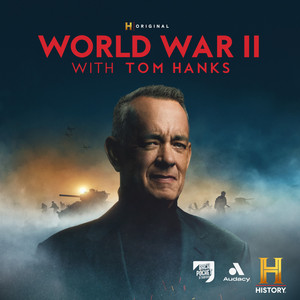
Blitz
What was Operation Sea Lion and why did it fail?
Operation Sea Lion was Hitler's plan to invade Great Britain after France fell in June 1940, requiring the Luftwaffe to first destroy the Royal Air Force and leave Britain defenseless. Germany failed to break British air defenses, losing 600 aircraft in seven weeks , and Hitler postponed the operation indefinitely in mid-September 1940.
How Göring's confidence led to strategic failure
After conquering France in just six weeks, Hitler believed Britain would seek peace or surrender without resistance. When Churchill refused all peace overtures, Hitler ordered the Luftwaffe to prepare for invasion—but first, the RAF had to be eliminated. Hermann Göring, commander of the German air force, promised a swift victory. He claimed the RAF could be destroyed in just three days , a boast that would prove catastrophically wrong.
The Luftwaffe's strategy was methodical: first target RAF airfields, then administrative sites and supply depots. The plan looked sound on paper. Yet as the episode explains , the RAF's pilots and ground crews proved far more resilient than German intelligence had predicted.
The scale of German losses and British resistance
By the end of August 1940, the Luftwaffe was sending 1,000 planes a day across the English Channel to crush British fighter squadrons and airfields. The bombing was relentless and destructive, yet Britain kept flying. In seven weeks of continuous combat, Germany lost an aircraft force it could not easily replace—a catastrophic attrition that no amount of new production could quickly repair.
The Royal Air Force, by contrast, was defending its home territory with shorter supply lines, better radar, and pilots who could bail out and fight again if shot down. German pilots who were captured or wounded were lost forever. This fundamental asymmetry meant what the podcast details in depth : Germany could not afford the attrition it was suffering.
"We shall fight on the beaches. We shall fight on the landing grounds. We shall fight in the fields and in the streets. We shall fight in the hills. We shall never surrender."
Winston Churchill — British Prime Minister, addressing Parliament and the nation in June 1940 after France's surrender. Churchill's defiant speeches became the moral anchor of British resistance, rallying public morale when invasion seemed imminent and reinforcing his government's absolute refusal to negotiate with Nazi Germany.
Churchill's unwavering refusal to surrender—expressed through speeches that stiffened the nation's resolve—meant there was no political pathway to German victory by air power alone. Operation Sea Lion required air superiority; without it, an amphibious invasion across the Channel was suicide. The episode also reveals how Edward R. Murrow's live broadcasts from London during the bombing raids galvanized American sympathy for Britain , adding political pressure that would eventually tilt the United States toward support.
By mid-September 1940, Hitler had no choice. The Luftwaffe had failed to achieve air superiority. The RAF was still flying. Invasion without air cover was impossible. Hitler indefinitely postponed Operation Sea Lion and turned his strategic focus eastward—toward the Soviet Union, a decision that would reshape the entire war.
Operation Sea Lion required the Luftwaffe to destroy the RAF before any invasion could proceed across the English Channel.
Göring's three-day prediction for RAF destruction proved wildly optimistic; Britain's radar, pilot recovery advantage, and defensive position made air superiority impossible for Germany.
The Luftwaffe lost 600 aircraft in seven weeks—losses Germany's economy and production could not quickly replace.
Hitler indefinitely postponed the invasion in September 1940, marking the first major strategic defeat of Nazi Germany and the first check on Hitler's continental conquests.
What was the internal debate within the British War Cabinet about negotiating peace with Hitler in 1940?
Churchill flatly refused to negotiate, believing that entering peace talks would cause British morale to collapse and signal weakness to the nation. Foreign Secretary Lord Halifax had pushed for using Italian dictator Benito Mussolini as an intermediary to broker a peace treaty, but Churchill's absolute refusal and his famous defiant speech ended all internal debate on surrender.
The internal war over negotiation
In May 1940, as German forces swept through France and the British Expeditionary Force faced defeat, a profound disagreement emerged at the highest levels of British government. Lord Halifax, the Foreign Secretary, led a faction convinced that the war with Germany was unwinnable and that Britain should seek terms while it still had leverage to preserve its independence and empire.
Halifax's proposal was concrete: use Mussolini as a diplomatic go-between to open negotiations with Hitler. The logic was pragmatic but politically explosive—if Britain waited until after invasion, any negotiated settlement would be dictated from a position of utter defeat. Halifax believed a negotiated peace, however costly, was preferable to annihilation.
Churchill's absolute refusal
Churchill rejected this entirely. His reasoning was psychological and strategic: any hint of negotiation would shatter public confidence and signal to the British people that surrender was possible. The moment Parliament or the press learned that the War Cabinet was exploring peace terms, panic would spread, resolve would fracture, and the nation's will to resist would evaporate.
Rather than debate the issue further, Churchill delivered a speech that made his position unambiguous and ended internal discussion altogether. As he declared, "We shall fight on the beaches. We shall fight on the landing grounds. We shall fight in the fields and in the streets. We shall fight in the hills. We shall never surrender." This wasn't diplomatic language—it was a public declaration of principle that made negotiation politically impossible.
To learn more about the broader strategic and military context of this critical moment, listen to the full episode on Listenly , which traces how the German army outmaneuvered French and British forces through the Ardennes and set the stage for this desperate political choice.
What was Churchill's political strategy for winning World War II and how did he approach the United States?
Churchill's central strategy for winning the Second World War depended entirely on getting America involved . He sent a forceful telegram to President Roosevelt warning that Nazism could eventually threaten the Americans themselves, and requested destroyers, naval assistance, guns, planes, and steel. But Roosevelt wanted to help and was constrained by strict neutrality laws and the political risk of involvement during an election year in which he was running for a third term.
Persuading Roosevelt in a constrained moment
Churchill understood that Britain alone could not defeat the Nazi war machine. The moment he took office as Prime Minister in May 1940, after the fall of France and the crisis of the British Expeditionary Force, Churchill faced a military catastrophe: over 450,000 soldiers trapped on the beaches at Dunkirk with no realistic means of rescue. The British army was desperate, the nation isolated, and the Wehrmacht ascendant across Western Europe.
Roosevelt sympathized with Churchill's predicament, but American voters were deeply isolationist. As detailed in the Blitz episode , Roosevelt was running for reelection and faced fierce political opposition to any American military commitment. Congress had passed strict neutrality legislation that criminalized selling weapons to belligerents, and breaking those laws carried enormous political risk in an election year.
Churchill's telegram strategy was direct: he painted a picture of a world in which Hitler, after conquering Europe and Britain, would turn his armies toward the Americas. This was not a distant threat—it was presented as inevitable unless America acted now . The British Prime Minister requested not a declaration of war, but material support: warships, aircraft, ammunition, and steel to keep the Royal Navy and Royal Air Force fighting.
The American dilemma between principle and law
Roosevelt faced an impossible position. Legally, he could not simply hand over destroyers or military equipment to a belligerent nation. Politically, his base was divided between those who wanted complete isolation and those who feared a Nazi victory. He was also running for an unprecedented third term, which itself was controversial, and any move toward war could cost him the election.
As the episode explores , Roosevelt found creative workarounds—the destroyers-for-bases deal being the most famous—but these took time to negotiate and were modest compared to what Churchill actually needed. The American industrial response would eventually be massive: following the fall of France, Roosevelt authorized production of 50,000 warplanes . But these aircraft would not materialize in British hands immediately, and by autumn 1940, Churchill faced the German bombing campaign known as the Blitz without the American fighter squadrons he desperately wanted.
The tension between Churchill's urgent strategic need and Roosevelt's legal and political constraints defined their relationship through 1940 and 1941. Churchill had to convince Roosevelt that American self-interest, not just British survival, demanded intervention—a message Churchill reinforced repeatedly through his telegrams and public statements. Listen to the full episode to hear how this diplomatic pressure ultimately reshaped American foreign policy and led toward Pearl Harbor and full American entry into the war.
"We shall fight on the beaches. We shall fight on the landing grounds. We shall fight in the fields and in the streets. We shall fight in the hills. We shall never surrender."
Winston Churchill — Prime Minister of the United Kingdom, delivering his famous address to Parliament in June 1940 after the fall of France and the evacuation at Dunkirk. Churchill was a career politician, soldier, and wartime leader whose rhetorical power and strategic vision shaped British morale and foreign policy throughout the war.
How did Edward R. Murrow's radio broadcasts from London influence American public opinion during the Blitz?
Edward R. Murrow broadcast live from London during the Blitz, transmitting the actual sounds of air raid sirens, anti-aircraft fire, and falling bombs directly into American homes via radio. His immersive "you are there" style gave Americans direct emotional exposure to the suffering of British civilians, including women and children. These broadcasts made a sea change in American attitudes, laying the groundwork for isolationist sentiment to shift toward support.
Sound as testimony: bringing the Blitz into American living rooms
Murrow's technique was revolutionary for the time. Rather than describing events after the fact, he positioned listeners inside the experience itself —hearing the wail of sirens, the crack of anti-aircraft guns, the whistle of descending bombs. This wasn't reportage; it was immersion. The German Luftwaffe bombed London on 57 successive nights in the fall of 1940, and Murrow's broadcasts captured that relentless terror in real time.
As detailed in the Blitz episode , the sheer auditory power of these broadcasts—the raw sound of an air raid—made the distant conflict viscerally real to American listeners who had never experienced combat. Hearing the bombs fall on London streets meant Americans could no longer view the war as a distant European problem.
Shifting isolationism through civilian suffering
The emotional stakes of Murrow's broadcasts centered on British civilians—women and children —facing death from above. This detail was crucial to changing American hearts. Isolationist sentiment had run deep in the United States; many Americans saw no reason to enter a foreign war. But Murrow's broadcasts made the human cost of that war undeniable.
By transmitting the fear, destruction, and courage of ordinary Londoners under bombardment, Murrow created what the episode describes as a "sea change" in American public opinion. Americans who heard the Blitz through Murrow's broadcasts began to see Britain's struggle as their own stake in the world.
"We shall fight on the beaches. We shall fight on the landing grounds. We shall fight in the fields and in the streets. We shall fight in the hills. We shall never surrender."
Winston Churchill — British Prime Minister, speaking to Parliament in June 1940 as Germany prepared to invade. These words, delivered amid the collapse of France and the retreat from Dunkirk, became the defiant voice of Britain's resolve—precisely the sentiment Murrow's broadcasts would carry across the Atlantic to American audiences.
For those who want to understand how the broader context of the Blitz unfolded —including the strategic bombing campaign, the Luftwaffe's losses, and why Germany ultimately abandoned invasion plans—the full episode explores these dimensions in depth.
Murrow broadcast live from London during the Blitz with direct audio of air raids, sirens, and explosions—making distant war viscerally present in American homes.
His "you are there" style exposed Americans to the suffering of British civilians, particularly women and children, humanizing the conflict.
The broadcasts created a fundamental shift in isolationist sentiment, building American support for Britain before the United States entered the war.
Radio journalism became a tool of emotional testimony, proving that sound and immediacy could change public opinion on war itself.
What was the Blitz and what was its human impact on Britain?
The Blitz was the Luftwaffe's sustained terror bombing campaign against British civilian areas that began in the fall of 1940 after Germany abandoned its invasion plans. German bombers attacked London on 57 successive nights, causing indiscriminate death through collapsing buildings, raging fires, and ruptured gas mains. Tens of thousands of civilians were killed across British cities, with some victims buried in mass graves.
Months of relentless bombardment on civilians
After the rapid German victories in France and the Low Countries forced the British Expeditionary Force into a desperate retreat across the Channel, Hitler shifted his strategy. With the prospect of invading Britain growing uncertain, the Luftwaffe began a systematic bombing campaign designed to break civilian morale and destroy the nation's industrial capacity.
The intensity of the assault was staggering. Night after night, German bombers came across the English Channel, targeting London and major industrial cities. The randomness of the attacks made them particularly devastating—a bomb could strike a residential street, a factory, or a hospital with equal impunity. Ordinary buildings collapsed into rubble , trapping families in their homes and shelters. Gas mains ruptured, creating secondary explosions and fires that spread uncontrollably through neighborhoods.
As World War II with Tom Hanks details , the human toll was enormous. Tens of thousands of British civilians lost their lives in the bombing raids. Entire families were wiped out in single nights. The scale of death became so overwhelming that authorities could not give each victim an individual burial—many were laid to rest in mass graves , a grim testament to the war's reach into civilian life.
The Blitz represented a turning point in modern warfare. For the first time in British history, the civilian population faced the direct onslaught of an enemy military force not as distant casualties of war, but as deliberate targets. The full episode explores how British society responded to this unprecedented terror and the long-term psychological and social effects of months of bombardment.
"We shall fight on the beaches. We shall fight on the landing grounds. We shall fight in the fields and in the streets. We shall fight in the hills. We shall never surrender."
Winston Churchill — British Prime Minister during the Blitz. Churchill's defiant words steeled British resolve during the nation's darkest hour, when invasion seemed imminent and the bombing campaign threatened to collapse the home front.
To understand the full strategic context of why Germany abandoned invasion plans in favor of the bombing campaign, listen to the episode , which examines the military calculations and the turning point that led Hitler to redirect his fury toward civilian targets.
What was the Battle of Britain and what was its outcome?
The Battle of Britain was the largest and most intense aerial combat the world had yet seen , fought between the German Luftwaffe and the British Royal Air Force in 1940. By the end of August 1940, the Luftwaffe was sending 1,000 planes a day across the English Channel while Britain defended with approximately 2,950 aircraft. In seven weeks, the Luftwaffe lost 600 aircraft and their crews—a decisive defeat that forced Hitler to postpone his invasion of Great Britain indefinitely in mid-September 1940.
Germany's Aerial Assault and Britain's Desperate Defense
After the fall of France in June 1940, Hitler turned his attention to Britain as the only remaining obstacle to German dominance in Western Europe. To prepare for Operation Sea Lion—the planned invasion of the British Isles—the Luftwaffe had to first destroy the Royal Air Force. As explained in the podcast , the scale of the air campaign was unprecedented: German bombers and fighters pounded British airfields, radar stations, aircraft factories, and eventually cities with sustained intensity throughout the summer and early autumn of 1940.
The numerical disparity was stark but deceptive. Britain had approximately 2,950 aircraft to defend its airspace, yet the Luftwaffe was not only numerically superior but could rotate fresh aircraft and crews across the Channel. The British, by contrast, were fighting over their home territory—a crucial advantage that allowed downed pilots to be rescued and returned to service, while German pilots captured over England were removed from the fight entirely.
This asymmetry became critical as the weeks progressed. The Luftwaffe, confident in its overwhelming strength, launched systematic attacks beginning in earnest in July 1940. As detailed in this episode of World War II with Tom Hanks , by late August the campaign reached its crescendo, with German formations crossing the Channel in waves of 1,000 aircraft per day.
The Turning Point: Luftwaffe Losses and Strategic Failure
The outcome, however, defied German expectations. In the span of just seven weeks, the Luftwaffe lost 600 aircraft and their experienced crews —casualties that could not be easily replaced. British pilots, though exhausted, proved more resilient and tactically superior in their Supermarine Spitfires and Hawker Hurricanes. German losses mounted as the summer turned to autumn, and the Luftwaffe's ability to sustain the offensive eroded.
By mid-September 1940, the strategic reality became clear: the Luftwaffe had failed to achieve air superiority over Britain. Without control of the skies, Operation Sea Lion—the German invasion—could not proceed. Hitler postponed the invasion indefinitely, signaling the first major strategic reversal of the Nazi war effort. The Blitz, the subsequent bombing campaign against London and other cities, would continue, but the decisive aerial battle was lost.
The Battle of Britain stands as a watershed moment in World War II. For the first time, Nazi Germany had been checked militarily, and the myth of German invincibility had been shattered. Discover the human stories and strategic decisions that shaped this pivotal moment in history by listening to the full episode.
What were the terms of the French armistice signed with Germany in June 1940?
France's armistice with Germany in June 1940 imposed severe military restrictions: the French army was reduced to no more than 100,000 men , and the country was partitioned into a German-occupied zone covering roughly three-fifths of French territory and a southern zone governed by Marshal Pétain from Vichy. Hitler personally demanded that the signing take place in the same railway carriage where Germany had surrendered at the end of World War I.
The Partition of France and Military Humiliation
The armistice terms deliberately divided France into two distinct regions. Germany would occupy the northern and western portions of the country, controlling the most economically productive and strategically valuable areas. The remaining southern territory, roughly two-fifths of France, became the independent but German-aligned state of Vichy France, administered by Marshal Philippe Pétain from the spa town of Vichy.
This partition was designed not only to control France militarily but also to fragment French sovereignty. As the episode details , the French army—which had been regarded as Europe's finest only weeks earlier—was stripped of any meaningful capacity to resist. The 100,000-man limit meant France retained barely a police force rather than a genuine military, transforming what had been a major European power into a neutered state.
Hitler's Symbolic Revenge
Hitler's insistence on using the World War I surrender carriage was an act of calculated psychological dominance . The same railway car in the Forest of Compiègne where Germany had signed its armistice ending the First World War in 1918 became the stage for German victory in 1940. This choice erased the perceived humiliation of 1918 and symbolically completed Hitler's reversal of the Versailles order—a message the Nazi leader made explicit to the world.
To learn more about how this armistice came to pass and the desperate evacuations that preceded it , listen to the full episode.
Why did Hitler order his panzers to halt during the Dunkirk evacuation?
Hitler halted his advancing panzer divisions at Dunkirk in May 1940 for two critical reasons: his tank forces had far outpaced their supporting infantry , creating a vulnerable gap in the German lines, and Field Marshal Hermann Goering persuaded him that the Luftwaffe alone could destroy the trapped Allied troops on the beaches. This decision, rooted in overconfidence in German air power, allowed the evacuation to proceed far more successfully than Hitler anticipated.
Logistics and Command Frustration at the Front
When Hitler traveled to the front lines to assess the rapid German advance, he discovered a serious operational problem: his panzer divisions had pushed so far ahead that infantry units were struggling to keep pace . This created a dangerous gap in the German formation and left forward commanders exposed to Allied counterattack. Hitler was also visibly angry that frontline generals were not sending back detailed, timely reports—a communication breakdown that deepened his concerns about maintaining control over the sprawling campaign.
This logistical strain was real. The panzer divisions, spearheading the blitzkrieg assault through Belgium and France, were designed for rapid movement, but the Wehrmacht's traditional infantry-heavy structure could not sustain the same pace. Hitler's frustration reflected a commander's legitimate need to consolidate his gains and ensure his forces remained cohesive. However, this caution would soon collide with a more tempting argument.
Goering's Air Gamble and the Fatal Misjudgment
Hermann Goering, commander of the Luftwaffe, seized the moment to convince Hitler that air power alone could finish the trapped Allies . He argued that approximately 300,000 British and French troops—the cream of the British Expeditionary Force—were cornered on the beaches of Dunkirk with nowhere to escape, sitting ducks for German bombers and fighters. Goering's confidence in air superiority, combined with Hitler's frustration over panzer logistics, proved decisive.
Hitler granted the Luftwaffe the primary role in destroying the Allied forces, agreeing to halt the advance of his ground forces while the air campaign unfolded. As explained in the episode , this decision proved to be one of the most consequential misjudgments of the war. The Luftwaffe, despite its strength, was unable to prevent the evacuation; by contrast, the halted panzers might have sealed off all escape routes entirely.
The consequences reverberated for years. Operation Dynamo, the British rescue mission launched on May 26, 1940, succeeded in evacuating over 450,000 troops from the beaches—men who would later become the nucleus of the British Army's resistance and eventual counteroffensive. Had the panzers continued their advance unopposed, the strategic picture of the war would have shifted dramatically.
To understand how Goering's air force performed during this critical moment and what happened next, listen to the full episode , which covers the weeks of aerial combat that would soon define the Battle of Britain and the Blitz.
What was Operation Dynamo and how many troops were evacuated at Dunkirk?
Operation Dynamo was the British sea rescue plan launched on May 26, 1940, to evacuate Allied troops trapped on the beaches of Dunkirk. British planners…
Why did the French army collapse so quickly in May 1940 despite being considered Europe's finest?
The French army in 1940 possessed superior numbers and some of the largest and best tanks in the world , yet collapsed in weeks. German panzer divisions created a 60-mile gap in French lines by racing through the Ardennes, and older French reservists along the Meuse could not mobilize fast enough—panic, not organized defense, swept through their ranks.
The Strategic Illusion: The Maginot Line and Misplaced Confidence
The French had invested heavily in the 280-mile Maginot Line system of fortifications along their eastern border, complete with underground tunnels, electric railroads, and artillery batteries. This engineering achievement created a false sense of invulnerability. Confident the border was secure, French command positioned their best troops along the Belgian-Dutch border instead of guarding less fortified terrain.
As explored in detail in this episode of World War II with Tom Hanks , the assumption that France could repel Germany—just as it had in the First World War—left a critical vulnerability unguarded: the Ardennes Forest.
Blitzkrieg Tactics Outpaced Static Defense
German General Erich von Manstein engineered a breakthrough that exploited this gap. While one Wehrmacht force distracted the French and British by sweeping through Belgium, German panzer divisions raced through the Ardennes undetected , punching a 60-mile hole in French lines and cutting off the retreat of British and French forces that had surged into Belgium expecting the main German effort there.
The speed of the German advance overwhelmed the French response. The troops stationed along the Meuse were mostly older reservists, not the elite units positioned to the north. As the podcast explains , they faced a wave of panic rather than the coordinated, methodical defense France had prepared for in 1914–1918.
Discover the precise mechanics of Manstein's trap and how it isolated over 300,000 British Expeditionary Force troops in this related question on the strategy itself .
What was the Manstein Plan and how did it trap the Allied forces in May 1940?
General Erich von Manstein designed a two-pronged deception: send forces visibly through Belgium to draw the Allies forward, then strike the real blow through the Ardennes Forest — terrain so steep and densely wooded that no one expected tanks to cross it. The Allied armies surged into Belgium exactly as planned, exposing their flank. Hitler threw the bulk of the Wehrmacht through the Ardennes, creating a breakthrough the Allies had never anticipated and could not stop.
Belgium as the bait — and why the Allies took it
On May 10, 1940, German forces swept into the Netherlands and Belgium. To French and British commanders, this looked like a replay of World War I: a German thrust through the Low Countries, exactly the direction the Maginot Line was designed to force. France had spent enormous resources building that 280-mile fortification system along the German border, confident it sealed off any direct assault.
That confidence had a dangerous side effect. France positioned its best troops — and the British Expeditionary Force of approximately 300,000 men, described as the cream of British ground troops — along the Belgian-Dutch border, ready to push forward and meet the Germans head-on. As Tom Hanks recounts in World War II with Tom Hanks , this was precisely what Hitler wanted them to do.
Manstein understood that a predictable German attack through Belgium would be met by a prepared Allied army. So he kept that Belgian thrust alive — just not as the main effort. It was a feint on a national scale.
Blitzkrieg — The war-of-movement tactics that General Manstein championed. The concept relied on speed, surprise, and concentrated armored force to punch through enemy lines before defenders could regroup. Manstein was described as a "big advocate of blitzkrieg tactics" — and the Ardennes thrust was its most consequential application. The Ardennes: the gap no one thought to guard
The Ardennes Forest, stretching across southern Belgium and Luxembourg, was widely considered impenetrable — too steep, too wooded, too narrow for a modern armored advance. Allied planners largely dismissed it as a viable axis of attack. Manstein bet everything on that assumption being wrong.
While Allied armies were surging north into Belgium toward the distant rumble of gunfire, the Wehrmacht's main armored force was threading through the Ardennes in a column that stretched back for miles. When it broke out into open France, there was nothing meaningful in its path. The episode explored in this podcast makes clear that the Allies had not just been outfought — they had been outthought from the start.
The breakthrough created a massive pocket. More than 450,000 French, Belgian, and British soldiers found themselves cut off and pushed toward the English Channel. The trap had closed completely by May 20, 1940, as detailed in the "Blitz" episode of World War II with Tom Hanks .
"We shall fight on the beaches. We shall fight on the landing grounds. We shall fight in the fields and in the streets. We shall fight in the hills. We shall never surrender."
Spoken in the immediate aftermath of the Allied collapse in France — a direct response to the catastrophe the Manstein Plan had produced.
That defiance came after the fall, not before it. The Manstein Plan had already done its work. Understanding the full strategic collapse that made those words necessary is something World War II with Tom Hanks covers with striking clarity across the "Blitz" episode.
The Beginning
How did Nazi ideology shape Hitler's treatment of Jewish people and Slavic populations in occupied Poland?
Adolf Hitler's worldview was built on a neo-Darwinian biological struggle between races, with the Aryan race — the Germans — destined to rule Europe and the world. Jews were scapegoated for Germany's defeat in World War I, for economic ruin, and for virtually every societal ill, while Slavic Poles were classified as Untermenschen — "under-humans" — to be violently cleared from the territory Hitler called Lebensraum. From the first days of the invasion of Poland in September 1939, these convictions translated directly into atrocity on the ground.
From scapegoat to pogrom: how antisemitism escalated from policy to street violence
Nazi antisemitism did not begin as mass murder. Initial policy aimed to make life so intolerable for Jewish people that they would leave the Reich voluntarily. Discriminatory laws, economic exclusion, and public humiliation were the instruments of that first phase.
The invasion of Poland shattered whatever restraint remained. The Schutzstaffel (SS) desecrated synagogues and publicly humiliated Jewish civilians from the opening days of the occupation. On September 12, 1939 — just eleven days after the invasion began — German troops forced Jewish residents of Konskie to dig graves. The exercise descended into a pogrom: 22 Jews were killed. This is precisely the kind of documented atrocity that World War II with Tom Hanks reconstructs from primary evidence, refusing to let the scale of the war obscure individual crimes.
The Einsatzgruppen — mobile killing squads operating behind the front lines — were the organized expression of the same ideology. They followed the Wehrmacht into Poland specifically to eliminate political and intellectual leaders, Jews prominent among them.
Lebensraum — literally "living space" in German. A core concept in Nazi ideology, articulated in Hitler's Mein Kampf , it held that the German people required vast territories to the east — primarily Slavic lands — for expansion, settlement, and resource extraction. Clearing those lands of their existing populations was treated not as a consequence of this goal but as an explicit part of it. Slavic Poles as "under-humans": the racial logic behind a second extermination campaign
Jewish people were not the only group targeted by Nazi racial doctrine in occupied Poland. Slavic Poles were classified as racially inferior — the term Untermenschen was applied to them as a matter of official ideology. In Hitler's framework, they were an obstacle to be removed from the Lebensraum he coveted, not a population to be administered.
This logic drove the SS to target not just ordinary civilians but the entire Polish leadership class. As documented in this podcast , between 20,000 and 30,000 Polish officers, writers, diplomats, and aristocrats were eventually interned in camps near the Katyn woods and executed — shot in the back of the head — by the NKVD following the Soviet invasion of eastern Poland under the Molotov-Ribbentrop Pact. Two occupying powers, two ideologies, one shared objective: the elimination of Polish national identity at its roots.
The economic humiliation that preceded these crimes matters as context. By 1923, hyperinflation following the Treaty of Versailles had driven the cost of a loaf of bread in Germany from three marks to 80 billion marks. That lived catastrophe made the Nazi scapegoating of Jews and foreign enemies viscerally credible to millions of ordinary Germans — a point Tom Hanks addresses directly in the episode .
"Poland has been overrun by two of the great powers which held us in bondage for 150 years, but were unable to quench the spirit of the Polish nation. The heroic defence of Warsaw shows that the soul of Poland is indestructible."
Broadcast statement, 1939 — cited in World War II with Tom Hanks , Episode 1: The Beginning
What was American public opinion and official policy toward the war in Europe at the outbreak of World War II in 1939?
When Americans were polled on whether the United States should get involved, 90% said absolutely not. The peacetime army was small, and neutrality laws made…
What role did Winston Churchill play at the outset of World War II and why did Roosevelt seek him out rather than Chamberlain?
When war was declared, Winston Churchill was appointed First Lord of the Admiralty and joined the new war cabinet — the role he had held before, and the one his reputation demanded. Franklin D. Roosevelt bypassed Neville Chamberlain entirely, sending Churchill a private congratulatory note and opening a secret line of communication. Roosevelt's calculation was simple: Churchill was a fighter, and the man you call when you already know the war is going to be big.
A decade in the wilderness — then proven right overnight
Throughout the 1930s, Churchill had been the loudest and most persistent critic of Adolf Hitler's rise in the West. He warned repeatedly about German rearmament and the failure of the European powers to enforce the Treaty of Versailles — warnings that were largely ignored by a political class exhausted by the memory of the First World War.
When Germany invaded Poland on September 1, 1939, and Britain declared war, Churchill's decade of alarm was suddenly vindicated. His return to government was not a reward — it was an acknowledgment that he had been right all along. As Tom Hanks traces in World War II with Tom Hanks , Churchill's re-entry into power came at exactly the moment his warnings became reality.
Roosevelt's secret note — and why it went to Churchill, not Chamberlain
Franklin Roosevelt understood, even in September 1939, that the United States would probably not be able to stay out of this war. Ninety percent of Americans polled at the outbreak said the U.S. should absolutely not get involved in the European conflict — but Roosevelt was already thinking ahead.
Chamberlain, as Prime Minister, was the formal head of the British government. Yet Roosevelt chose to write directly to Churchill. The reason was strategic and personal: Churchill had a reputation as a combatant, a man who would fight rather than appease. Roosevelt needed a contact in London who shared his assessment of the war's gravity. Chamberlain did not fit that profile.
That private note established a secret channel between the two men — a back-channel that would grow into one of the defining diplomatic relationships of the entire conflict. This episode of World War II with Tom Hanks captures the moment that relationship began, before most of the world had grasped what was coming.
"Poland has been overrun by two of the great powers which held us in bondage for 150 years, but were unable to quench the spirit of the Polish nation. The heroic defence of Warsaw shows that the soul of Poland is indestructible."
Winston Churchill — First Lord of the Admiralty, 1939. Quoted in World War II with Tom Hanks , Episode 1: The Beginning. Churchill had rejoined the war cabinet the same day Britain declared war on Germany, returning to the same post he had held during the First World War — a symbolic and substantive signal of what kind of war his government intended to fight.
Churchill's war cabinet statement in 1939 made the British position explicit: the British Empire and French Republic should prepare for a war of at least three years. That sober, long-horizon thinking is precisely what made him credible to Roosevelt, and it is detailed in the opening episode of World War II with Tom Hanks .
The contrast with Chamberlain could not have been sharper. Where Chamberlain had pursued appeasement and believed Hitler's assurances, Churchill had never wavered. For Roosevelt, choosing his British interlocutor was not a diplomatic formality — it was a signal about what kind of war he expected and what kind of ally he was already preparing for. The full context of this calculation is explored across the podcast series .
What was Britain and France's strategic response to the German invasion of Poland in September 1939?
Despite having signed a guarantee with Poland promising military assistance if Germany invaded, Britain and France were neither militarily nor mentally…
How did Hermann Göring's Luftwaffe contribute to the destruction of Warsaw in 1939?
Göring ordered the largest air raid ever seen to break Warsaw's resistance, dropping thousands of pounds of high-explosive and incendiary bombs over the…
What was the role of the Einsatzgruppen during the German invasion of Poland in September 1939?
The Einsatzgruppen were mobile death squads, a special wing of the SS, specifically set up to go into towns, villages, and other areas of Poland to kill…
What was the Molotov-Ribbentrop Pact and how did it seal Poland's fate in 1939?
In August 1939, just one week before Germany invaded Poland, Stalin shocked the world by signing a non-aggression pact with Hitler. Beyond the public pledge…
How did Adolf Hitler rise from an obscure corporal to the undisputed leader of Germany?
Hitler, a young Austrian corporal who had fought for the German army in World War I, was personally devastated by Germany's defeat and never accepted it. He…
The Treaty of Versailles stripped Germany of territories, populations, and raw materials, transferred the entire German merchant marine to the Allied powers, and imposed punishing financial reparations.
How did World War II begin and what triggered the German invasion of Poland on September 1, 1939?
On September 1, 1939, before the world was fully awake, a million and a half men, 1,300 planes, and 2,750 tanks crossed the Polish border simultaneously in a lightning assault that would later define the term Blitzkrieg. Adolf Hitler justified the attack by invoking the Polish Corridor — a strip of territory once part of Germany, ceded to Poland under the Treaty of Versailles after World War I — but his actual ambition went far deeper: to seize Lebensraum, or "living space," for a new German empire stretching into Eastern Europe.
The territorial grievance over the Polish Corridor was real enough as a political flashpoint, but in the episode Tom Hanks makes clear it was a pretext rather than a cause. Hitler had telegraphed his expansionist vision years earlier in Mein Kampf, and the Wehrmacht's assault on Poland was the culmination of years of calculated preparation — diplomatic pressure, rearmament, and ultimately the Molotov-Ribbentrop Pact, which neutralized the Soviet threat to Germany's east and left Poland exposed on two fronts. The Luftwaffe's Stukas screamed over Polish towns while armored columns rolled through at a pace that left defenders — and the watching world — stunned.
Key term from the episode Lebensraum Literally "living space" in German, Lebensraum was the ideological cornerstone of Hitler's eastward expansion strategy. The idea held that Germany needed to conquer vast territories in Eastern Europe to sustain and grow a racially defined empire — a justification that transformed a border dispute into a continental war. The speed and scale of the assault shocked even seasoned observers. Civilians woke to the rumble of tanks rolling through their streets, uncertain what was happening. Within hours, the mechanics of what would become the deadliest conflict in human history were already in motion. Hanks traces these opening hours in full in the episode on Listenly , drawing on firsthand accounts of soldiers and civilians caught in the storm.
"Poland has been overrun by two of the great powers which held us in bondage for 150 years, but were unable to quench the spirit of the Polish nation. The heroic defence of Warsaw shows that the soul of Poland is indestructible."
— Quoted in Episode 1, World War II with Tom Hanks